

20 Unforgettable Things to Do in Honolulu for Free
Discover amazing things to do in Honolulu for free. Enjoy the island's attractions, beauty and culture without the price tag.
This article was originally published on Feb. 4, 2025, and was updated March 18, 2026.
I used to think everything in Honolulu was expensive, or that Hawai‘i was simply out of reach for people like me. But once I started exploring beyond the usual tourist spots, I realized that some of the most unforgettable experiences on the islands are completely free (and made the best memories). I
There are plenty of free things to do in Honolulu, O‘ahu’s capital. If you’re traveling on a budget, check out these iconic beaches. hiking trails and meaningful cultural experiences without spending a dime.
1. Stroll Waikīkī Beach
Golden sand, gentle surf and the iconic silhouette of Lēʻahi (Diamond Head) rising in the background — this is Waikīkī Beach. Find a spot to settle in, watch first-time surfers find their footing and catamarans drift in and out. Stay for sunset, a nightly celebration, and linger after dark. There is nothing quite like strolling Waikīkī under a starlit sky.
For a different view of the Waikīkī, head offshore on a private Waikīkī walking tour.
2. Hike Lēʻahi (Diamond Head Crater)

For Hawaiʻi residents, the legendary hike at Lēʻahi (Diamond Head) is free, and just $5 for visitors. The short but steep trail winds through tunnels and historic military bunkers before delivering sweeping views over the coast. Arrive early for cooler temperatures and fewer crowds. Reservations are required for non-residents.
3. Watch the sunset at Magic Island

Ala Moana Beach Park and its adjoining Magic Island are favorite local hangouts. Ala Moana offers calm water for swimming and paddleboarding, while Magic Island is a wonderland of shaded lawns, palm trees perfectly spaced for hammocking and sunset views over the ocean.
4. Check out Kakaʻako’s Street Art Scene

The neighborhood of Kakaʻako is a living canvas, thanks to the non-profit organization World Wide Walls and its Hawaiʻi Walls mural project. Wander the side streets around SALT at Our Kakaʻako to find massive, colorful murals that tell stories of culture, nature and community, painted by world-renowned artists from Hawaiʻi and beyond. New murals are added each year during the annual World Wide Walls festival.
5. Kids Visit Honolulu Museum of Art for Free

Anyone 18 and under gets into the Honolulu Museum of Art for free, but it is well worth a visit at any age. Step into elegant courtyard galleries filled with Asian, European and Pacific works, modern and contemporary art, and rotating exhibitions that keep the experience fresh year-round. The museum's permanent collection spans more than 50,000 works, making it one of the largest and most respected art museums in the Pacific. Free docent-led tours are offered on Wednesdays and Sundays at 11 a.m. and Fridays at 2 p.m. with paid admission.
6. Explore the Hawaiʻi State Capitol

Hawaiʻi's State Capitol is an open-air architectural marvel steeped in symbolism. The cone-shaped legislative chambers represent the volcanic origins of the islands and the surrounding columns evoke the tall palm trees of the tropics. Completed in 1969, the building replaced the original ʻIolani Palace as the seat of state government and remains one of the most distinctive capitol buildings in the United States. Visitors are welcome to explore the grounds and interior with a free self-guided tour on weekdays.
7. Enjoy the Kūhiō Beach Hula Show

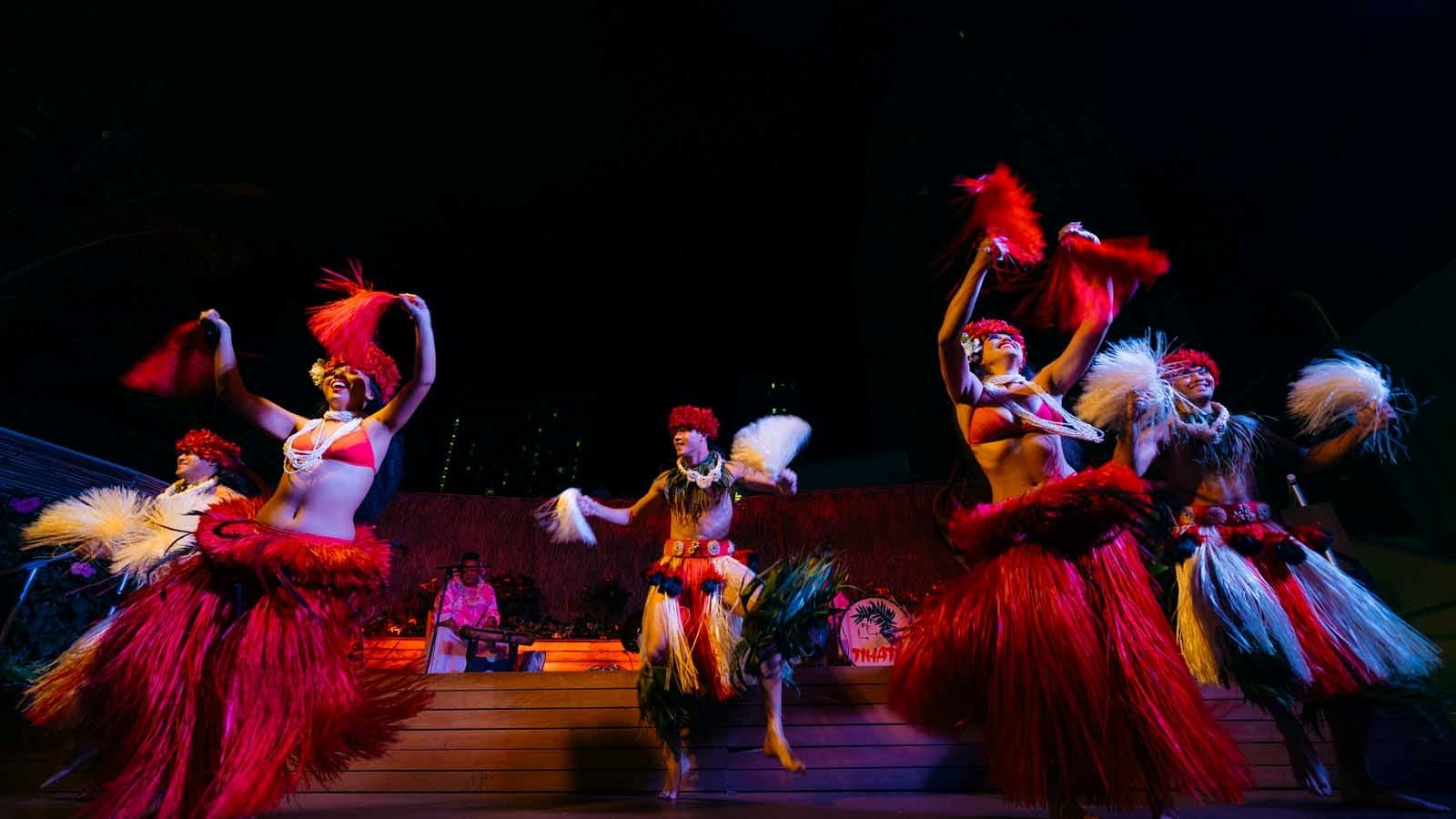
Visitors shouldn't miss the many complimentary hula performances found throughout Waikīkī, where dancers share the stories of Hawaiʻi through mele (song), movement and tradition. At the Kūhiō Beach Hula Mound — located beachside on Kalākaua Avenue near the Duke Kahanamoku Statue — free performances are held every Tuesday and Saturday from 6:30 to 7:30 p.m., weather permitting. The only authentic pā hula (hula mound) in Waikīkī, the venue was blessed in a traditional Hawaiian ceremony dedicating it solely to the presentation of hula. Shows are free, held outdoors on the grass, and are subject to cancellation when parades or street events close the area.
8. Wander the UH Mānoa Campus

Tucked into the lush Mānoa Valley, the University of Hawaiʻi at Mānoa campus is worth a quiet afternoon stroll. Wander through serene gardens, visit a working loʻi kalo (wetland taro field) that connects the campus to Native Hawaiian agricultural tradition and take in the mix of mid-century and contemporary architecture that gives the campus its distinctive character. The Commons Gallery hosts rotating exhibitions featuring student and faculty work alongside visiting artists.
9. Hike the Makapuʻu Point Lighthouse Trail

At the southeastern tip of Oʻahu, the Makapuʻu Point Lighthouse Trail is one of the most rewarding and accessible hikes on the island. The fully paved 2-mile round-trip trail winds along the coast with views of the Windward Coast, offshore islets and the historic red-roofed Makapuʻu Lighthouse. On a clear day you may even spot Molokaʻi and Lānaʻi on the horizon. From November through May, the lookout is one of Oʻahu's best spots to watch migrating humpback whales. The trail is open daily and parking is free.
You can also take the whale watching offshore with a whale watching tour!
10. Take a Free Class at the Royal Hawaiian Center

Learn to dance hula, weave lauhala, play ʻukulele or string your own lei in The Royal Grove at Waikīkī's Royal Hawaiian Center. There are also free performances, rooftop yoga and classes just for keiki, or kids. Cultural experiences are hosted daily, check the schedule for times.
Take your hands-on experience a step further with a local cooking class, where you can learn to prepare some of Hawaiʻi’s favorite flavors yourself.
11. Relax at Foster Botanical Garden

This green garden oasis in the heart of Honolulu is free for children under 5, $3 for kamaʻaina and just $5 for visitors. Meander around towering trees, delicate orchids and exotic palms for a peaceful break from the hustle and bustle of the city. Open daily from 9 a.m. to 4 p.m. Tours of the garden are free with admission.
12. Watch Friday Fireworks in Waikīkī

Every Friday night, fireworks light up the sky above the Hilton Hawaiian Village — a beloved Waikīkī tradition that has been drawing crowds for decades. For the best view, spread a blanket at Magic Island facing toward the harbor, or stake out a spot on the beach behind the Hilton. Arrive around 7 p.m. to claim your place before the crowds settle in, as this is a popular local ritual. Fireworks begin around 7:45 p.m. and last approximately ten minutes.
13. Roam the Harold L. Lyon Arboretum

The University of Hawaiʻi at Mānoa campus is also home to the Lyon Arboretum, a 194-acre botanical garden open to the public for free, where hiking trails wind through one of the most diverse plant collections in the Pacific. Open Monday through Friday from 9 a.m. until 3 p.m.
14. Explore Chinatown

Honolulu's Chinatown is among the oldest in the United States, stretching back to the mid-1800s when Chinese laborers arrived to work the sugar plantations. Today the neighborhood has an eclectic mix of traditional lei shops, fresh fish and produce markets, herbal medicine stores, art galleries and some of Honolulu's best restaurants. Wander the covered markets along Maunakea Street by tropical fruit stands, fresh flowers and roasting meats.
15. Tour Historic Downtown

Pose for a photo with the gilded statue of King Kamehameha I — the monarch who unified the Hawaiian Islands, explore the storied grounds of ʻIolani Palace — the only royal palace on American soil, see the gorgeous Honolulu Hale, our City Hall, and more on a free, self-guided Capital District Walking Tour of 23 points of interest downtown.
16. Tour the U.S. Army Museum of Hawaiʻi

Located inside a historic military fort at Fort DeRussy Beach Park in Waikīkī, this museum surprises many with its thoughtful exhibits, that include tanks, old uniforms and personal stories. The U.S. Army Museum of Hawaiʻi tells the story of Hawaiʻi’s military history, including World War II and modern-day peacekeeping efforts. Admission and validated parking are free. Donations are welcome. Open Tuesday through Saturday from 10 a.m. until 5 p.m.
Continue exploring Oʻahu’s military history with a guided Pearl Harbor tour, including some of the island’s most significant World War II sites.
17. Find all of the Wahi Pana Art Installations

Wahi Pana — meaning "storied places" in Hawaiian — is a contemporary public art project that illuminates the historical and cultural significance of various sites across Oʻahu. Backed by a $1 million Bloomberg Philanthropies Public Art Challenge grant and led by the City's Mayor's Office of Culture and the Arts, the initiative commissions Native Hawaiian artists to create site-specific works, including murals, sculpture, poetry installations, photography and video to bring indigenous moʻolelo (stories) back to the places where they were born. Installations are on view through February 2028 at locations across the island, from Fort Street Mall and Fort DeRussy in Honolulu to Kapiʻolani Park, Hanauma Bay, Koko Crater Botanical Garden and beyond. Find the locations at wahipana.com.
18. Relax at Kapiʻolani Park

At the foot of Lēʻahi, Kapiʻolani Park is Honolulu's oldest and largest public park. Established in 1877 and gifted to the people of Hawaiʻi by King David Kalākaua, the sprawling 300-acre green is a gathering place for joggers, picnickers, volleyball players, kite flyers and weekend athletes of every kind. The park is also home to the Waikīkī Shell, an open-air concert venue, and borders the Honolulu Zoo and Waikīkī Aquarium.
19. Browse local art on First Fridays in Chinatown

The First Friday of every month is a celebration of local art in Chinatown and at Capital Modern museum in downtown. Art galleries stay open late, some host art openings, and you can often find live music and drink specials at neighborhood bars where patrons spill onto the street.
Keep the creativity going with a light painting experience, where you can create colorful works of art using light and photography.
20. Visit the National Memorial Cemetery in Puowaina Crater

Puowaina Crater — known in Hawaiian as "hill of sacrifice" and to most as Punchbowl — is home to the National Memorial Cemetery of the Pacific. Set within the bowl of an extinct volcanic crater, the immaculately maintained grounds honor more than 50,000 American service members who gave their lives in World War II, the Korean War and the Vietnam War. There is also a beautiful view of Honolulu and the ocean from the crater rim. The cemetery is open to the public daily and admission is free.
Also check out...