

Returning to Lāhainā: A 2026 Visitor’s Guide
As Maui continues to rebuild Lāhainā after the devastating 2023 fires, one question remains for visitors, “Is it OK to come back?”
As Maui continues to rebuild Lāhainā after the devastating 2023 fires, one question remains for visitors: Is it OK to come back?
As you drive over the Honoapiʻilani Highway bypass and descend into Lāhainā, signs of recovery come into view. Residential construction sites signal homes being rebuilt. Native plants have begun to soften scorched lots. Lava rock walls remain where houses once stood. “Now Open!” signs flutter outside businesses that have returned, while roadside memorials honoring loved ones lost in the 2023 fires line the town’s entrance. Together, they mark both remembrance and recovery.
More than two years after the devastating fires, the heartbeat of West Maui continues. While the physical and cultural center of activity has shifted north to Kā‘anapali, Honokōwai, Nāpili and Kapalua, Lāhainā remains home to a resilient community working steadily toward rebuilding. As of December 2025, 100 homes have been rebuilt, with more in progress.
For many, Lāhainā holds deep personal meaning. It is home to kamaʻāina whose families have lived here for generations, as well as residents who relocated, built lives and raised families in town. It has also long been a meaningful place for visitors who return year after year and consider 96761 a second home. In the wake of the fires, some travelers may wonder whether it is appropriate to return. Community leaders and business owners say the answer is yes, with care and awareness.
“We want people to come back to Lāhainā,” said Rob Farrell, co-owner of Coco Deck Kitchen + Bar Lāhainā. “We want the support, we want to employ people, we want to be busy and we want to create jobs.” Coco Deck reopened after the fire as a reimagined version of its former restaurant, Duck Kine, shifting from a high-end concept to a more casual neighborhood spot. Located on the mauka side of Front and Kapunakea streets next to the Cannery Mall, it is one of the businesses that survived and now helps anchor the area’s gradual return.
Farrell emphasized that visitors play an important role in supporting recovery, but he also encouraged sensitivity. Curiosity about the fire, even when well intentioned, can sometimes reopen wounds. Everyone who experienced the disaster has a different comfort level when it comes to sharing their story. Some find it healing to talk about what happened, while others prefer privacy.
“Everybody has experienced some loss in one way, shape or form,” Farrell said. “Whether it was a loved one or their home or their pet or a job. Everybody suffered in some way. With that being said, we’re in the hospitality industry and we want to help educate people, too. I understand the curiosity. It usually comes from a good place.”
For visitors, that means being mindful of when and how questions are asked, respecting posted boundaries and remembering that Lāhainā is first and foremost a living community. Supporting local businesses, following guidance from residents and allowing space for healing are meaningful ways to contribute as the town continues its long-term recovery.
How to be a good visitor

Visitors returning to Lāhainā are encouraged to be thoughtful about how and where they spend their time and money. Leanne Pletcher, director of public relations and marketing for the Maui Visitors & Convention Bureau, said tourism can be a meaningful source of support when approached with care.
“Dining at locally-owned restaurants, shopping Maui-made and choosing experiences rooted in cultural and environmental stewardship all help strengthen local livelihoods,” Pletcher said. “Visitors who arrive with curiosity and an open heart — whether they’re enjoying beaches, exploring art and history or spending time in community spaces — help sustain the people and places that make Maui special.”
For those interested in learning more about Lāhainā’s culture and history, Pletcher recommends organizations such as the Lāhainā Restoration Foundation. The nonprofit was chartered in 1962 to preserve and interpret the town’s rich past, from its whaling era to its royal history dating back to 1794.
“Through organizations like the Lāhainā Restoration Foundation, there is an opportunity for guided cultural and historical experiences developed in partnership with local practitioners, historians and families,” Pletcher said. “These may include storytelling walks, ʻike-based, or knowledge-centered, programs and opportunities to learn directly from the community. These experiences allow visitors to engage with Lāhainā and West Maui in a way that is respectful, educational and supportive of local voices.”
David Allaire, former president of the Lāhainā Restoration Foundation (and my father, full disclosure), has witnessed the town’s evolution for more than five decades. A Lāhainā resident since 1970, Allaire spent 17 years leading the foundation and also served as senior vice president of TS Restaurants, a hospitality group founded with Kimo’s on Front Street in 1977. Kimo’s was among the many businesses lost in the fire.
Reflecting on the loss of the foundation’s eight cultural heritage sites and museums, Allaire emphasized that history itself was not destroyed.
“Did we lose our history? No, of course not, but we did temporarily lose our way of telling it,” he said. “We are stewards and storytellers of Lāhainā’s cultural and historic legacy, and we want to share that story in partnership with the community and invite people to learn what happened here.”
The fire represents another chapter in Lāhainā’s long and complex history, alongside its royal past, whaling-era roots, plantation years and modern role as a tourism center. For Allaire, Lāhainā remains a seaside village defined by what he calls a “Lāhainā sense of place,” a community that developed organically over more than 200 years and continues to endure.


What is open in Lāhainā?

For a list of open accommodations, restaurants, shops, activities and beaches, skip to the bottom of this article.
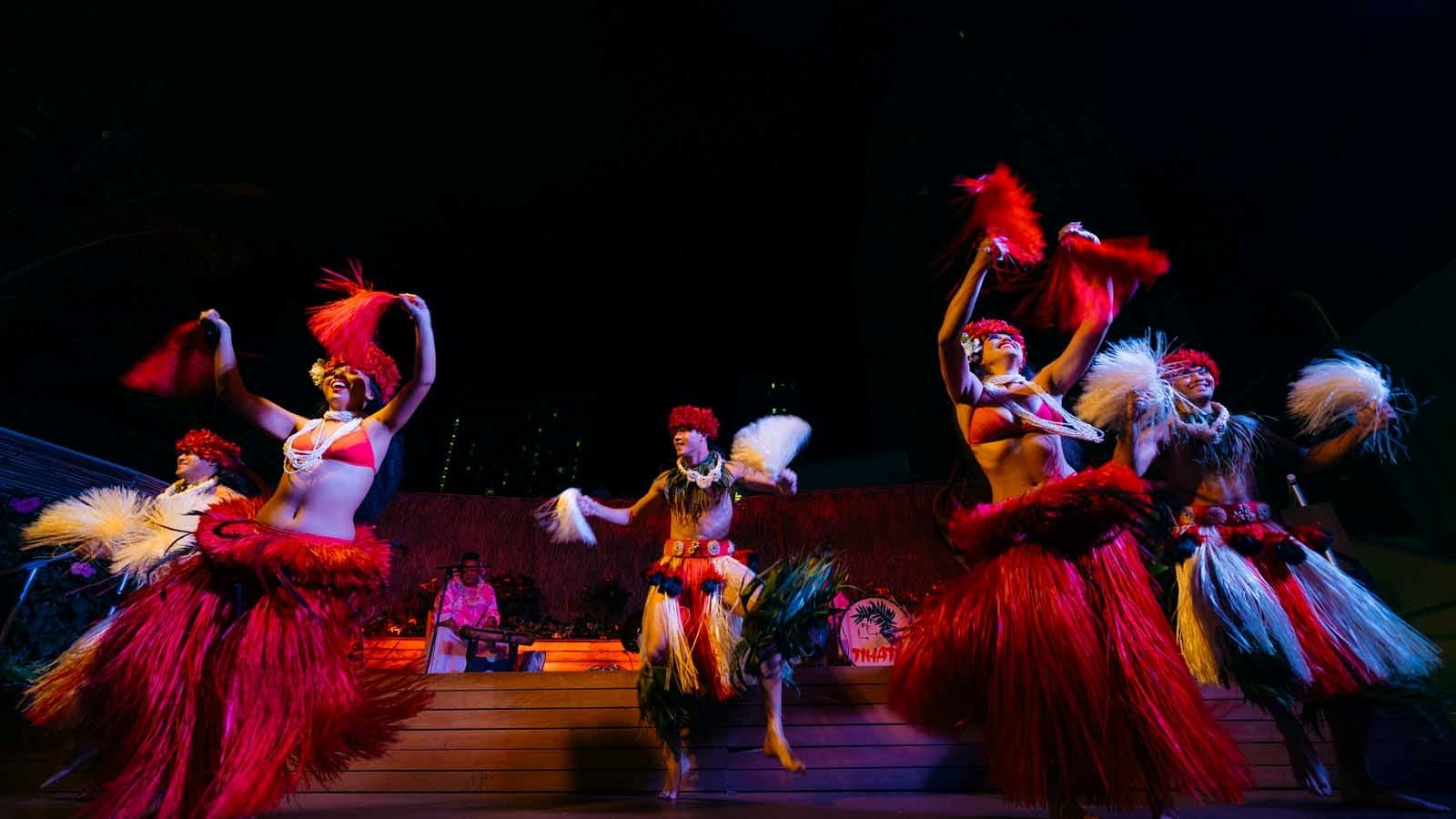
Several Lāhainā Restoration Foundation attractions, including the Lāhainā Courthouse and Baldwin Home, remain closed as rebuilding continues. With support from national preservation experts, the foundation has spent years developing careful reopening plans. In the meantime, LRF continues to support the community through off-site programming across West Maui. This includes the Lāhainā Music Series held at the Sheraton Maui Resort & Spa every third Thursday of the month and its annual benefit lūʻau, scheduled for Saturday, May 16, 2026 and hosted by Old Lāhainā Lūʻau, a longstanding community institution founded in 1986.
For those considering a return visit and looking for things to do on Maui, intention matters, particularly as more areas of town begin to reopen. Community members emphasize that thoughtful engagement is especially important as attractions such as Lāhainā Harbor come back online. The harbor has long served as a center of nautical commerce and is home to two well-known surf breaks.
“An ideal visit to Lāhainā and West Maui is one that balances relaxation with connection,” said Pletcher “It’s about enjoying the natural beauty that draws people here — ocean views, sunsets and time outdoors — while also being mindful of place and community.”
Pletcher described the reopening of Lāhainā Harbor as an encouraging step that allows longtime ocean-based businesses to return to the water. Operators now resuming activity include Sail Maui, Atlantis Submarines, Sea Link of Hawaiʻi and Kula Fishing Company.
Visitors are welcome to enjoy the harbor area, but are asked to remain attentive to boundaries, access points and parking rules. Following posted signage and keeping designated areas clear helps ensure the harbor functions safely as both a working waterfront and a shared community space.
Is it OK to drive through Lāhainā?

Visitors are asked to stay within areas that have been clearly designated for public access and tourism and to avoid entering parts of town that remain closed. While sections of Luakini, Prison, Dickinson and Front Streets have reopened, large areas are still reserved for residents who continue to grieve and rebuild.
Out of respect, many longtime residents avoid the burn zone entirely. Farrell said he has driven through Front Street only a few times since the fire.
“If you genuinely want to see that devastation, that's up to you,” he said. “But don't stop. Don't get out of the car. Don't wander around. Don't go to the banyan tree.”
Farrell encourages visitors who want to support the community to do so in ways that are welcomed. One option is dining at the five restaurants that survived on the north end of Front Street: Honu Oceanside, Māla Ocean Tavern, Coco Deck, Aloha Mixed Plate and Star Noodle.
How can I help Lāhainā?
For visitors looking to give back, Pletcher suggests volunteering with one of Maui’s nonprofit organizations. Opportunities include planting native trees, cleaning beaches or helping preserve cultural sites. Visitors can also attend events such as the Maui Friday Town Party in Kīhei, which offers a way to experience local culture while supporting Maui-based vendors and artists.
Farrell and his business partners also support the Lāhainā Community Land Trust, a foundation that aims “to help keep Lāhainā families in Lāhainā, protect cultural and environmental sites and explore values-based economies as Lāhainā rebuilds,” according to its website.
Allaire recommends supporting the Maui Strong Fund, overseen by the Hawai‘i Community Foundation. He notes it should not be confused with Lāhainā Strong, which is a non-registered, for-profit organization. Acknowledging the work the community has already poured into rebuilding Lāhainā, he encourages visitors who may be on the fence about returning. “Not only is it safe to come back,” he said, “it’s fun.”

For those ready to return, the following businesses and attractions are open and welcoming visitors.
Accommodations:
- Hyatt Regency Maui Resort & Spa
- Montage Kapalua Bay
- Nāpili Beach Resort & Spa
- Outrigger Kā‘anapali (formerly Kā‘anapali Beach Hotel)
- Royal Lahaina Resort & Bungalows
- Sheraton Maui Resort & Spa
- The Ritz-Carlton Maui, Kapalua
- The Royal Lāhainā
- The Westin Maui Resort & Spa
- The Whaler Kā‘anapali
Restaurants:
- Captain Jack’s Island Grill
- Coco Deck
- Duke’s Beach House Maui
- Happy Fish
- Honu Oceanside
- Hula Grill Kā‘anapali
- Kalei’s Maui
- Lahaina Noon Restaurant & Bar
- Leilani’s on the Beach
- Māla Ocean Tavern
- Maui Brewing Co. Kā‘anapali
- Merriman’s
- Monkeypod Kitchen by Merriman
- Mu‘u Mu‘u
- Pizza Paradiso & Pineapple Robot
- Sale Pepe
- Sansei
- Takumi
- Taverna
- ‘Ulu Kitchen
- VIA! by Sale Pepe
Shops:
- Honokōwai Marketplace
- Nāpili Plaza
- Whaler’s Village
Experiences:
Activities:
- The Branches (weekly live outdoor music at Royal Lahaina Resort & Bungalows)
- Hele Wai Eco Tours
- Maui Kuia Estate Chocolate Factory Tour + Cacao Farm Tour
- Maui Off-Road Adventures
- Old Lāhainā Lū‘au
- Skyline Hawai‘i Zipline Tour
- Trilogy Maui
Golf:
- Kā‘anapali Golf Courses
- Kapalua Golf: Plantation Course (open); Bay Course (closed indefinitely)
Trails/Beaches:
- Canoe Beach
- D.T. Fleming Beach Park
- Honokōwai Beach Park
- Kā‘anapali Beach
- Kahekili Beach Park
- Kapalua Bay
- Kapalua Coastal Trail
- Nāpili Bay
- Wahikuli Wayside Beach Park