Hawaii LogoHawaii Logo

Home

/

Blog & guides

/

Whale Watching in Hawaiʻi

Whale Watching in Hawaiʻi

By Hawaii.com

18 January, 2022

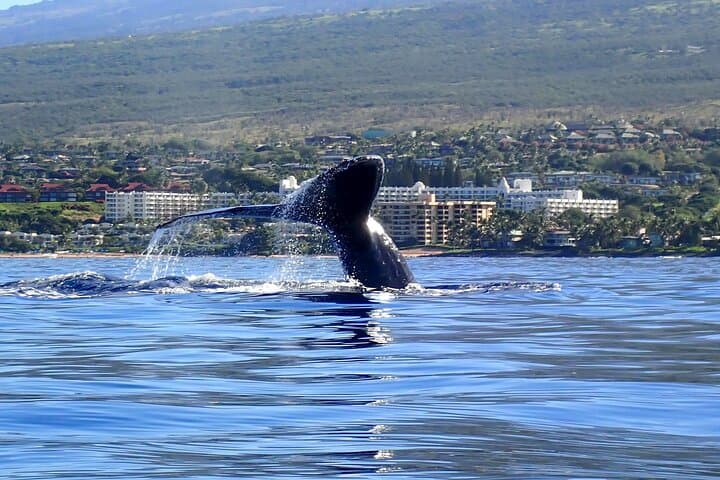
Whale tail in the ocean

Photo by Mike Ledray (Shutterstock).

This article was originally published on Jan. 18, 2022. It was updated March 7, 2026 and again on March 27, 2026.

The first time I saw a whale in Hawaiʻi, I was just off the Kona Coast of Hawaiʻi Island, paddling out in an outrigger canoe at sunrise. When we saw a tail flip out of the water in the distance, our tour guide shouted, "Who wants to jump in the water to hear them sing?" We dove in, just in time to hear the various high- and low-pitched cries of a male humpback whale.

What's great about whale watching in the Hawaiian Islands is the fact that you can see them from a boat, the shore or when you're out swimming around, depending on where you are and the time of year. It's one of the most unique experiences I've had since moving here.

Here is everything you need to plan and book your whale watching experience in Hawaiʻi.

Quick Facts

  • Season: December – May (peak: January – March)

  • Best island: Maui — highest humpback concentration in the ʻAuʻau Channel

  • Best time of day: Early morning (7–10am) for calmest water and best sighting conditions

  • Shore spotting: Free, available on all main islands

  • Sighting guarantee: Most Maui operators guarantee whale sightings during peak season

  • Tours from: $50–$120 per person

Browse Whale Watching Tours in Hawaiʻi
Activities Nearby

See all

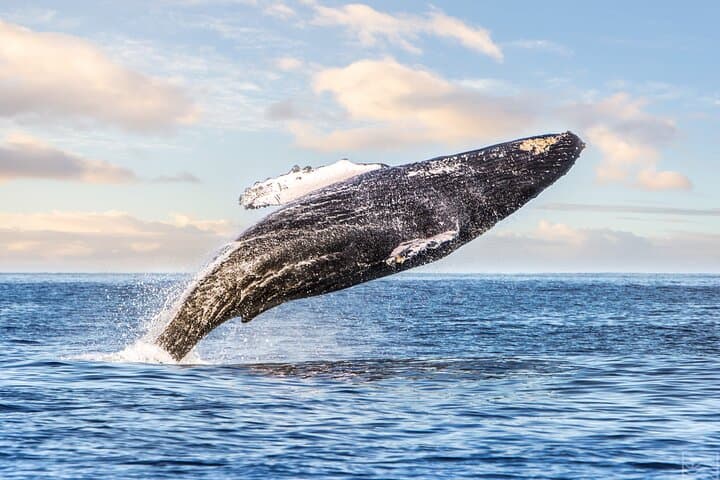
Whale breaching in the ocean.

Courtesy of Ko Olina.

Season & Best Time

Official season dates: December 15 to May 15, according to the Hawaiian Islands Humpback Whale National Marine Sanctuary.

If witnessing the seasonal migration of humpback whales is on your Hawaiʻi bucket list, you'll need to plan your trip around whale season. Humpbacks can arrive in Hawaiʻi as early as November. In 2025, we saw whales starting late September. Peak season runs January through March. This is when boat tours, 95% of the time, see whales breaching, slapping their tails and swimming in pods. February usually has the most whales in the water.

The protected sanctuary waters around Maui, Lāna'i and Moloka'i are among the most important humpback breeding grounds in the entire North Pacific, and the Au'au Channel between Maui and Lāna'i is especially active. Most islands offer whale watching cruises during the season, typically running two to two-and-a-half hours. Most tour operators offer a free rebook guarantee if no whales are spotted — though during peak season, that guarantee rarely needs to be honored. For the most immersive experience, consider paddling out in a canoe or kayak and getting in the water.

Activities Nearby

See all

Whale tail coming out of the ocean

Photo courtesy of Shutterstock.

Which Island Should I go to Whale Watch?

Maui

Maui is the best island overall for whale watching, particularly in the ʻAuʻau Channel between Maui, Molokaʻi and Lānaʻi. Most whale watching tours depart from Maʻalaea Harbor. Some tours are returning to Lāhainā Harbor after the 2023 wildfires put the harbor temporarily out of service. If you want to see whales from the shore, your best bet is Papawai Point and McGregor Point — both located on the Honoapiʻilani Highway.

Best for: Anyone who wants to ensure maximum whale activity.

Visit our Complete Maui Whale Watching Guide to learn more.

Activities Nearby

See all

Oʻahu

Oʻahu is the best island for spotting whales from the shore. During whale watching season Makapuʻu Point Lookout and Hālona Blowhole Lookout are both free, easily accessible and offer ideal vantage points. Boat tours are also available from Waikīkī, Ko ʻOlina and Waiʻanae.

Best for: Visitors based in WaikīkI who want flexibility.

Visit our Complete Oʻahu Whale Watching Guide for more information.

Activities Nearby

See all

Kauaʻi

Kaua'i has the most scenic backdrop for whale watching in Hawaiʻi. On the South Shore, tours depart from Port Allen — the island's main harbor — with views of lush, misty ridgelines. On the North Shore, you'll see the towering 3,000-foot cliffs of the Nā Pali Coast. The combination of humpback whales and Kaua'i's pristine untouched coastline makes for an incredible adventure.

Best for: Visitors who want a quieter experience with fewer crowds.

For more information, check out our Complete Kauaʻi Whale Watching Guide.

Activities Nearby

See all

Hawaiʻi Island (Big Island)

There are fewer humpback sightings on Hawaiʻi Island than on Maui, but what you will see is year-round spinner dolphin activity. Whale watching tours are available on both sides of Hawaiʻi Island, though the west side has more options, especially along the Kohala Coast.

Best for: Visitors combining whale watching with other Big Island activities.

Activities Nearby

See all

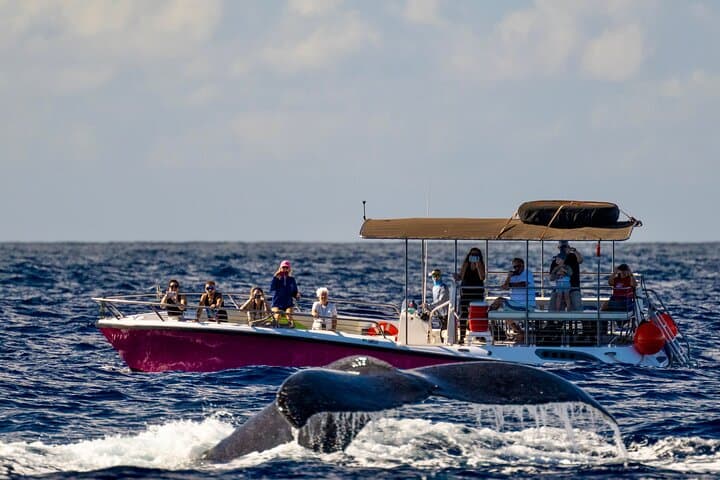
Whale watchers on a raft tour watching a whale come out of the ocean in hawaii.

Photo courtesy of Shutterstock.

Tour Types — What to Book and Why

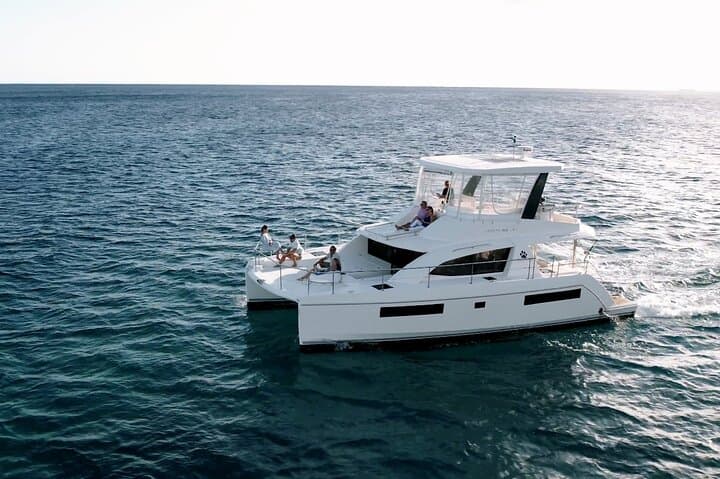
  • Large catamaran: Smooth, stable, good for families and anyone prone to seasickness. These are the most common for whale watching tours and usually include food and drinks. There will also be a naturalist on board to teach you about whales and what you are seeing along the way.

  • Small raft / zodiac: Closer to the water, faster and more intimate. The close proximity to the whales makes this option ideal for photographers. Keep in mind, these rides can be rougher in choppy conditions.

  • Kayak or SUP tour: Slowest and most quiet and immersive. Best for experienced kayakers and standup paddleboarders. This option might be only available on certain islands.

  • Sunset / dinner cruise: Combines whale watching with an evening experience. Less reliable sightings than morning tours but with the added bonus of sunset with cocktails and/or dinner.

  • Shore spotting: Free. Best spots to see whales are Papawai Point on Maui and Makapuʻu Lookout on Oʻahu. Bring your binoculars for a closer look.

Practical Planning: What to Know Before You Go

  • Book in advance: Peak season (January—March) tours sell out. Book at least 1–2 weeks ahead, longer for premium operators.

  • What to wear: It gets windy on the water even when it’s warm on shore. Wear a light jacket, hat and non-slip footwear.

  • What to bring: ID (for alcohol), binoculars, camera, cash for tips and Dramamine in case you get motion sickness.

  • The 100-yard rule: Vessels cannot approach closer than 100 yards under federal law. The whale can come to you — this is called “getting mugged” and it is the best possible outcome.

  • Sighting guarantees: Most operators during peak season offer a free return trip if no whales are spotted. Confirm before booking.

  • Morning vs evening: Morning tours have calmer water and higher sighting rates. The evenings bring gorgeous sunsets, but possibly fewer whale sightings.

What You’ll See

There are many ways humpback whales behave in the water, including:

  • Breaching: When a 40-ton humpback launches 90% out of the ocean before crashing back down in an explosion of white water.

  • Tail Slapping — When a humpback lifts its massive tail high above the surface and slaps it repeatedly against the water, producing a splash loud enough to hear from a quarter mile away.

  • Spy Hopping — This is one of the more quiet behaviors. It's when a whale rises slowly and vertically out of the water, holding its head just above the surface as if pausing to take a long, deliberate look above the water.

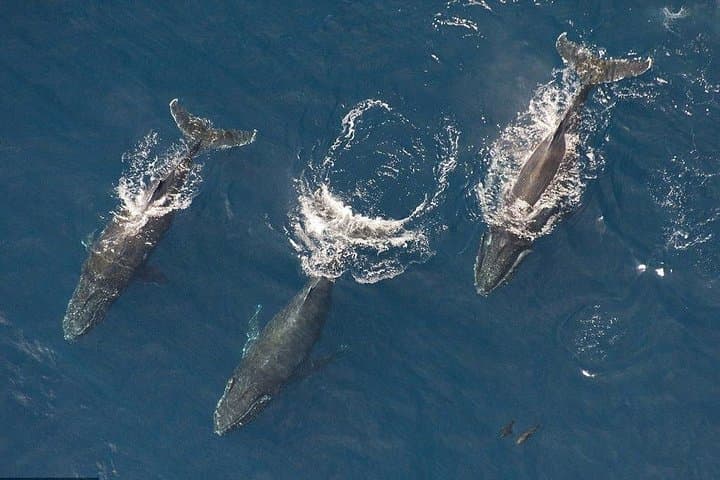
  • Competitive Pods — When multiple males pursue a single female it becomes a churning mass of enormous bodies jostling and rolling over one another across the water's surface for hours at a time.

  • Mother-Calf Pairs — When a newborn calf — already the size of a small car — stays glued to its mother's side, swimming and surfacing above the water in synchronicity.

  • Getting “Mugged” — Because humpbacks whales are protected, under the Marine Mammal Protection Act, it’s illegal for vessels to approach the whales any closer than 100 yards. That said, there’s always the hope that the boat will get “mugged,” which is when the whale will decide to swim towards you, potentially ending up inches from your boat or swimming directly underneath. If you’re lucky enough to get “mugged,” admire the details of the humpback’s body you can only see from up close, from the barnacles growing beneath their fins to the tubercles on top of their heads. On average, the North Pacific humpback whales grow 40-45 feet, with female whales being slightly larger. After the calves are born, they gain about eight pounds per hour from drinking their mother's milk, which is approximately 40% milk fat.

Year-Round Species

While humpback season draws the biggest crowds, Hawaiʻi has marine wildlife putting on a show year-round.

  • Short-finned pilot whales are the most frequently seen. Look for stocky, dark-bodied animals with distinctive bulbous heads and curved dorsal fins. They typically travel in tight family pods of 20 to 30 with synchronized movement across the water's surface.

  • False killer whales are more rare. These sleek dark-bodied whales are fast-moving and highly intelligent. They're known for leaping clear out of the water and occasionally swimming alongside boats, making them a favorite of researchers and underwater photographers. Despite their name, they don't look like killer whales.

  • Spinner dolphins are named for their habit of launching themselves into the air and spinning on their axis. They are incredible acrobats.

Browse Whale Watching Tours in Hawaiʻi

Hawaiʻi Whale Watching FAQs

Love Hawaiʻi? Stay Connected.

Join our newsletter for travel inspiration, insider tips and the latest island stories.

By subscribing, you agree to receive emails from Hawaii.com. You can unsubscribe anytime. See our Privacy Policy.