

By Sarah Burchard
15 March, 2026
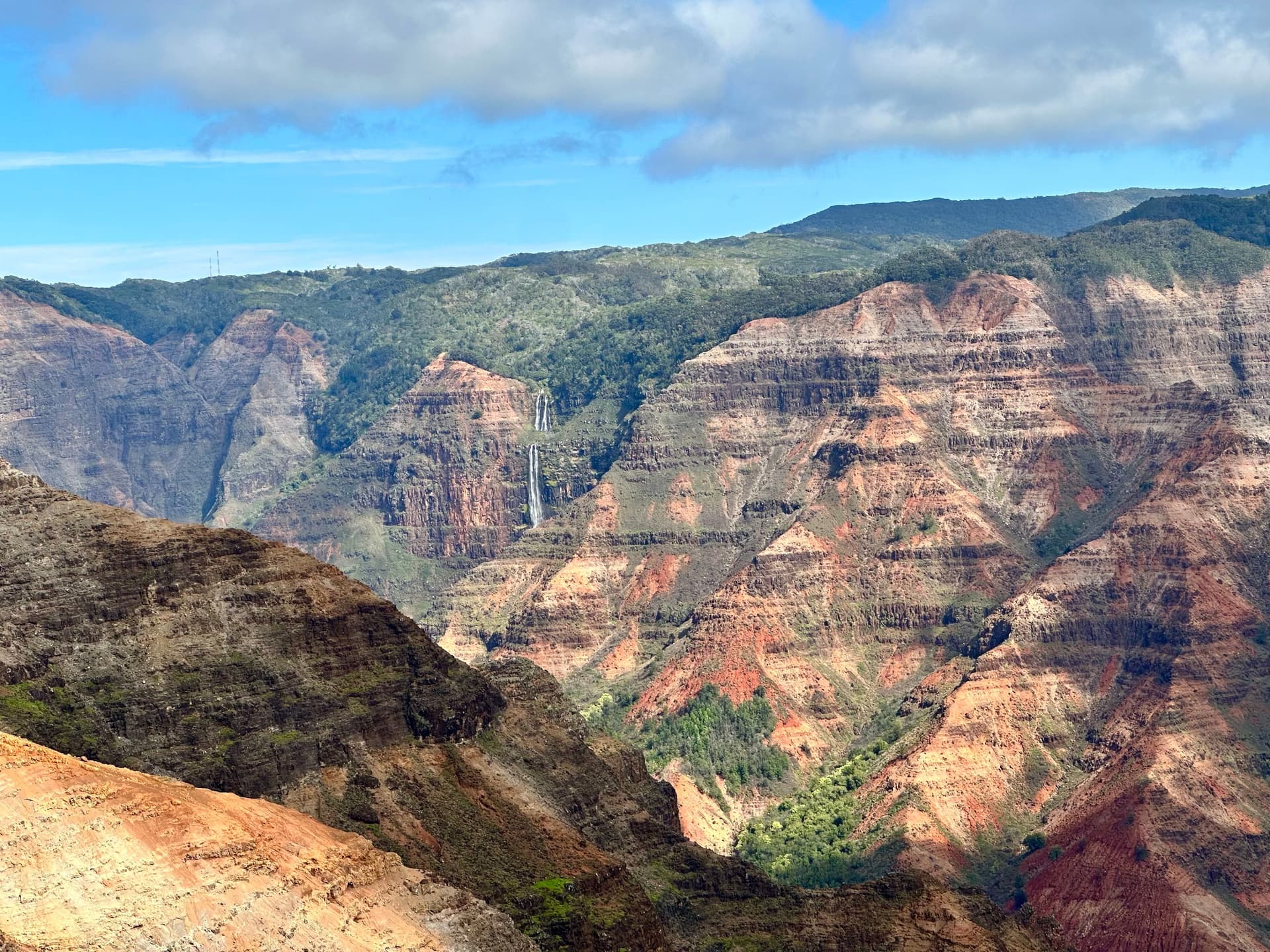
Waimea Canyon. Photo by Sarah Burchard.
This article was originally published on Feb. 4, 2025, and was updated March 15, 2026.
Waimea Canyon State Park on the West Side of Kauaʻi overlooks one of the most dramatic landscapes in the Pacific — a 14-mile-long, 1.5-mile-wide gorge that plunges more than 2,500 feet deep, with walls layered with yellow, orange and rust-colored rock, bright green vegetation and crystal blue waterfalls. Mark Twain called it "The Grand Canyon of the Pacific," and standing at the rim, it is easy to see why.
Visitors can take a scenic drive through the park, stopping at lookout points as the road climbs north toward Kōkeʻe State Park, where the views shift from canyon walls to the sea cliffs of the Nā Pali Coast. Along the way, there are picnic areas, a viewpoint toward Niʻihau Island and access to forest trails ranging from short ridge walks to long, strenuous descents to the floor of the canyon. Depending on the season, there is also trout fishing and pig and goat hunting nearby.
Whether you are here for a scenic drive or a full day of hiking, Waimea Canyon State Park is one of Kauaʻi's most memorable destinations.
See all
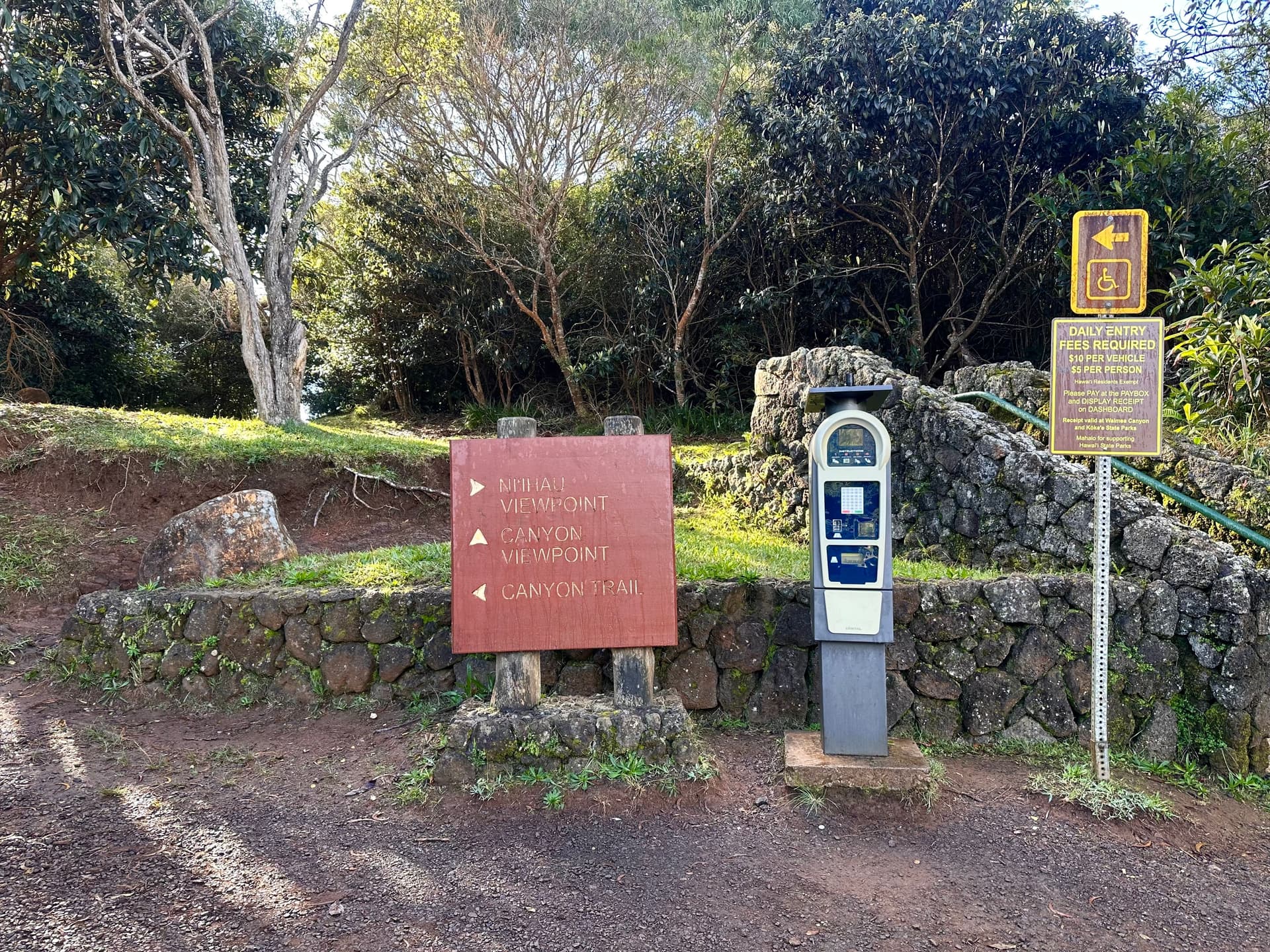
Pay station at Puʻu Hinahina Lookout. Photo by Sarah Burchard.
Waimea Canyon State Park covers about 1,866 acres. Kōkeʻe State Park, which surrounds the canyon to the north, covers an additional 4,345 acres. Together the two parks comprise more than 6,200 acres of Kauaʻi's West Side. With stops at lookouts, a picnic lunch and a short hike, plan to spend three to four hours in the park.
Due to ongoing roadwork, visitors should expect delays on weekdays, especially in Kōkeʻe State Park north of Waimea Canyon. Plan your visit before you leave. There is no cell service in most of the park, with the exception of the main road between Mile Markers 14 and 15 and at Puʻu Hinahina and Waimea Canyon lookouts.
Waimea Canyon is approximately 3,500 feet above sea level. Puʻu Hinahina Lookout sits at 3,640 feet and Waimea Canyon Lookout sits at about 3,400 feet. At this elevation, temperatures run about 20 degrees cooler than at sea level, so bring a jacket even if it looks warm down below. Many first-time visitors are surprised by how cool it gets up here. If it is 85 degrees in Waimea town, it is likely 65 degrees in the park.
Pay at the first paybox you see — located at all lookout points — and display your receipt on your dashboard. Your receipt is valid at every lookout throughout the park for the rest of the day, no need to pay again.
Parking Fee: $10 per vehicle for non-residents
Entrance Fee: $5 per person for non-residents (ages 4 and up)
Hawaiʻi residents: Free with a valid ID
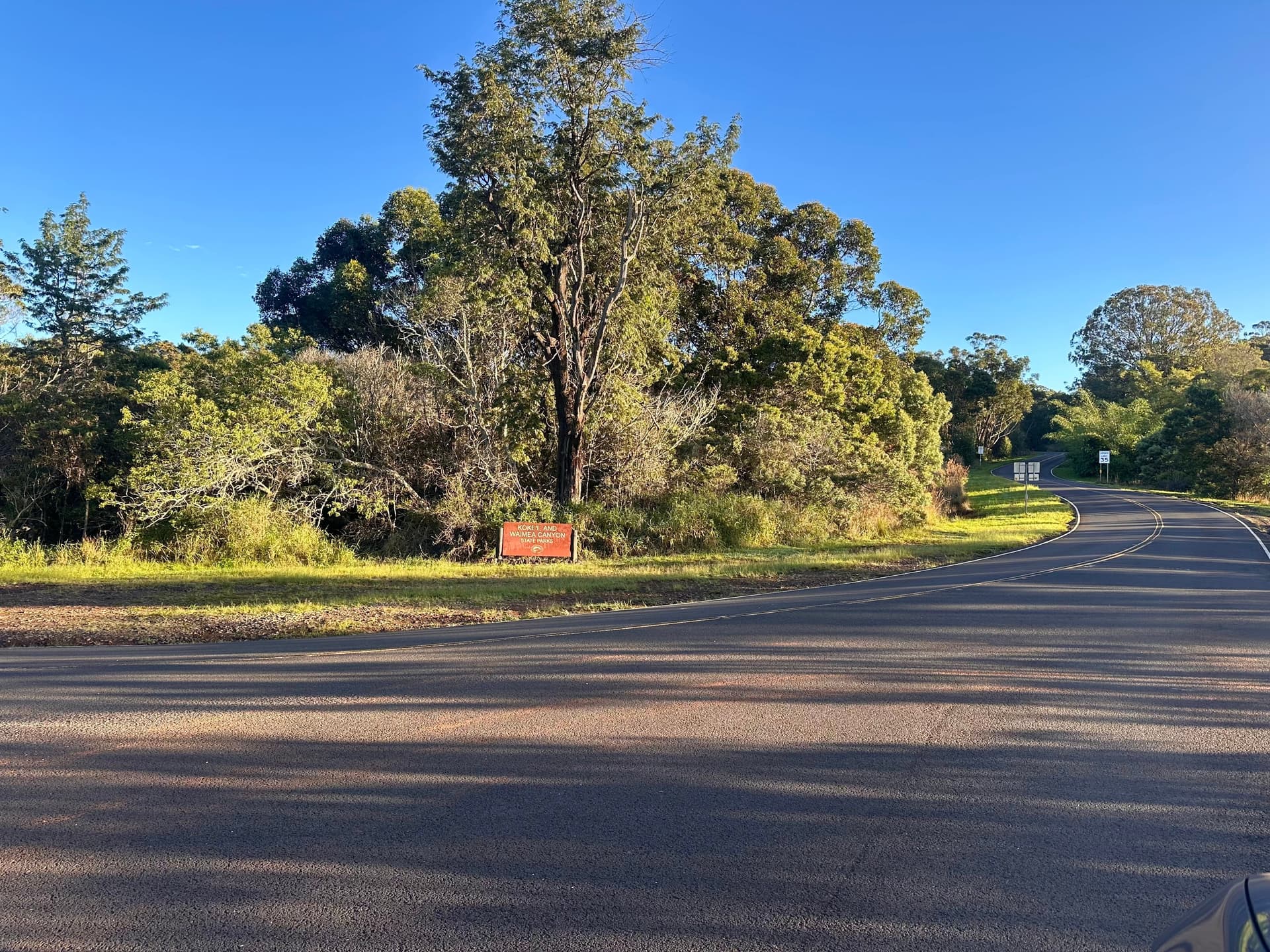
Waimea Canyon Drive turns into Kōkeʻe Road. Both roads lead to Waimea Canyon from Waimea Town. Photo by Sarah Burchard.
Waimea Canyon State Park is located on the West Side of Kauaʻi, Hawaiʻi's oldest and fourth-largest island. From most locations on the island, take Highway 50 to Waimea Canyon Drive, which climbs steadily through forest before opening up to expansive canyon views. Fill your gas tank before heading up, as there are no gas stations near either park. A car is essential, there is no public bus service to Waimea Canyon State Park.
Distances and approximate drive times to the top of Waimea Canyon State Park:
Waimea town (on the coast): about 14 miles, 30 minutes
Līhuʻe (main airport): about 38 miles, 1 hour 10 minutes
Kapaʻa town (East Side): about 80 miles, 1 hour 30 minutes
Hanalei town (North Shore): about 68 miles, 2 hours
Once inside the park:
Waimea Canyon Lookout to Puʻu Hinahina Lookout: 3.3 miles, about 7 minutes
Puʻu Hinahina Lookout to Kōkeʻe State Park headquarters: 1.8 miles, about 6 minutes
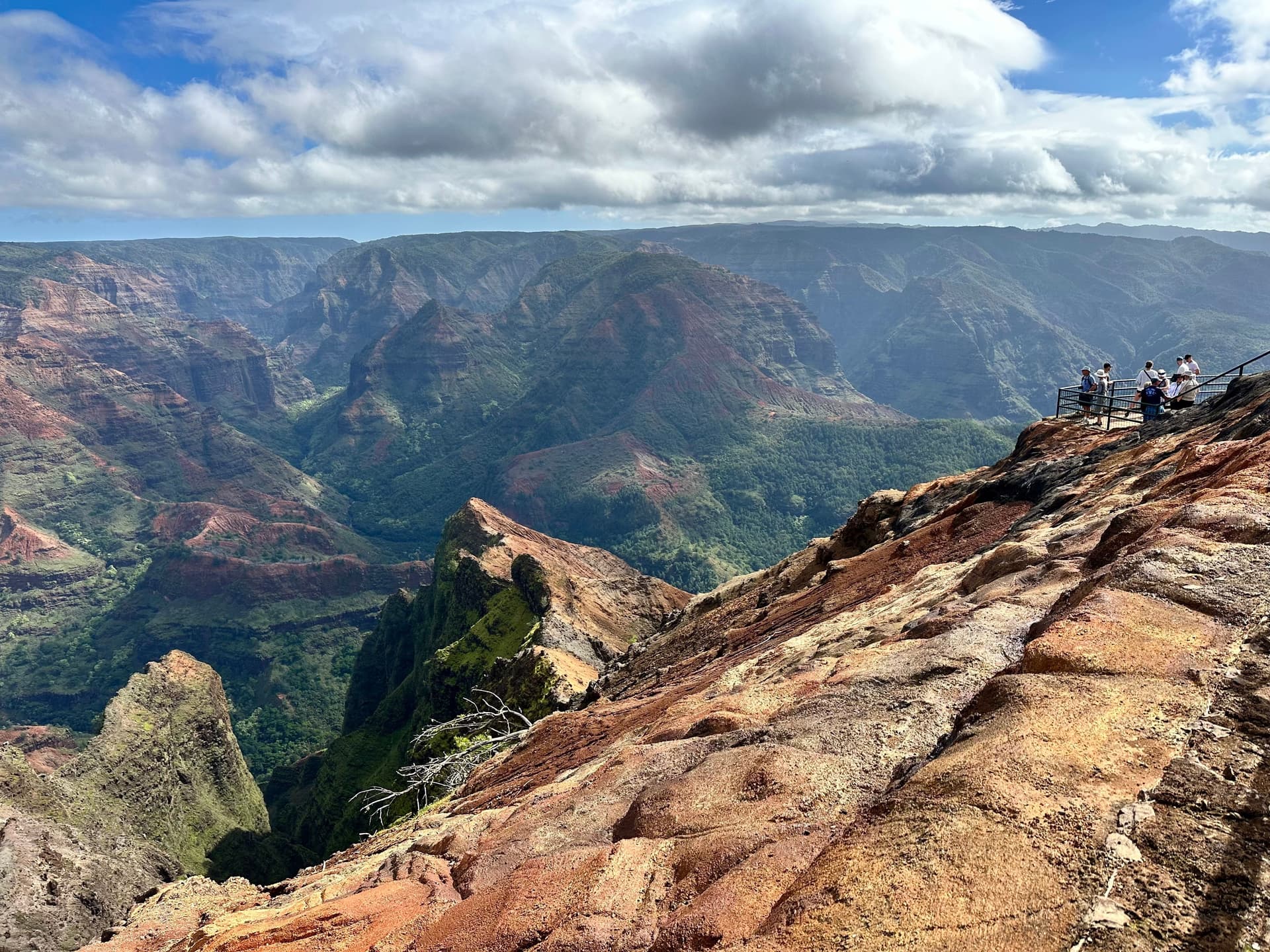
Waimea Canyon Lookout. Photo by Sarah Burchard.
Waimea Canyon is the result of more than 5 million years of geological activity unique to the Hawaiian Islands. Unlike the Grand Canyon, which was carved by a single river over time, Waimea Canyon was formed by the collapse of a volcanic shield, along a fault line on Kauaʻi's West Side. Over millions of years rain, rivers and erosion carved the canyon's walls into the layered red, orange and yellow rock you see today. The vivid colors come from iron oxide — essentially rust — in the basaltic rock, which oxidizes at different rates depending on exposure to air and water.
The Waimea River, the longest navigable river in Hawaiʻi, runs along the canyon floor and has been the primary force shaping the canyon over millennia. Fed by rain and runoff from Mount Waiʻaleʻale — one of the wettest places on Earth with an average annual rainfall of 420 inches — the river carved its way through layers of volcanic rock to create Waimea Canyon. The river eventually empties into the ocean at Waimea town on the coast, the same town that gave the canyon its name. Waimea means "reddish water" in Hawaiian, a reference to the rust-colored soil that colors the river after heavy rains.
The deepest, oldest layers near the canyon floor are dark basalt, formed from ancient lava flows. Moving upward, the rock transitions through layers of red and orange oxidized basalt, yellow volcanic ash deposits and, near the rim, younger, darker lava. Bright green vegetation clings to every available ledge and crevice, fed by the moisture that collects along the canyon walls. Several waterfalls appear after rain, some dropping hundreds of feet before disappearing into the forest below.
Waimea Canyon sits at the intersection of two different climate zones, which creates its diverse plant life. The dry West Side of Kauaʻi and its wet interior create microclimates that produce everything from dry shrubs to dense rainforest. Native plants and trees found in and around the canyon include ʻōhiʻa lehua — whose red flowers are among the first to grow in new lava, koa, kukui and iliau —a plant found only on Kauaʻi that resembles a small silversword and blooms once before dying. All three are in danger of extinction, like the sandalwood trees that once peppered this area pre-contact.
Waimea, Kauaʻi was the first place Captain James Cook landed in 1778. Soon after, the sandalwood trade began, reaching its peak in the Waimea Canyon in 1821 and 1822. By 1823, almost all of the sandalwood in this area was gone. Visitors may still be able to find a few sandalwood trees left near the Waimea Canyon Lookout parking lot.
The canyon is home to a variety of native and introduced wildlife. The nēnē, Hawaiʻi's state bird and an endangered species of goose, can sometimes be spotted near the lookouts and along Kōkeʻe Road. Native forest birds including the ʻapapane and ʻiʻiwi live in higher elevations of native forest. Feral pigs and goats, introduced by early Polynesian and European settlers, roam the canyon and surrounding forest reserves and are the subject of ongoing hunting and management programs to protect native vegetation.
The park's two main lookouts offer dramatically different views of the canyon. Waimea Canyon Lookout, at about 3,400 feet, is where you will go for the classic panoramic view of Waimea Canyon. Puʻu Hinahina Lookout, at 3,640 feet, offers two separate viewing areas: one facing the canyon and one facing west toward the island of Niʻihau, which is about 17 miles offshore and visible on a clear day.
Waimea Canyon State Park and Kōkeʻe State Park are adjacent to each other. Most visitors explore both in one day. As the road climbs north from Waimea Canyon into Kōkeʻe, the landscape shifts noticeably. Canyon views give way to dense native forest, the air gets cooler and wetter and the road eventually reaches the Kalalau Lookout at the top, where the canyon views are replaced by the cliffs of the Nā Pali Coast, 4,000 feet down to the ocean. Together the two parks offer one of the most complete and varied landscape experiences available anywhere in Hawaiʻi.
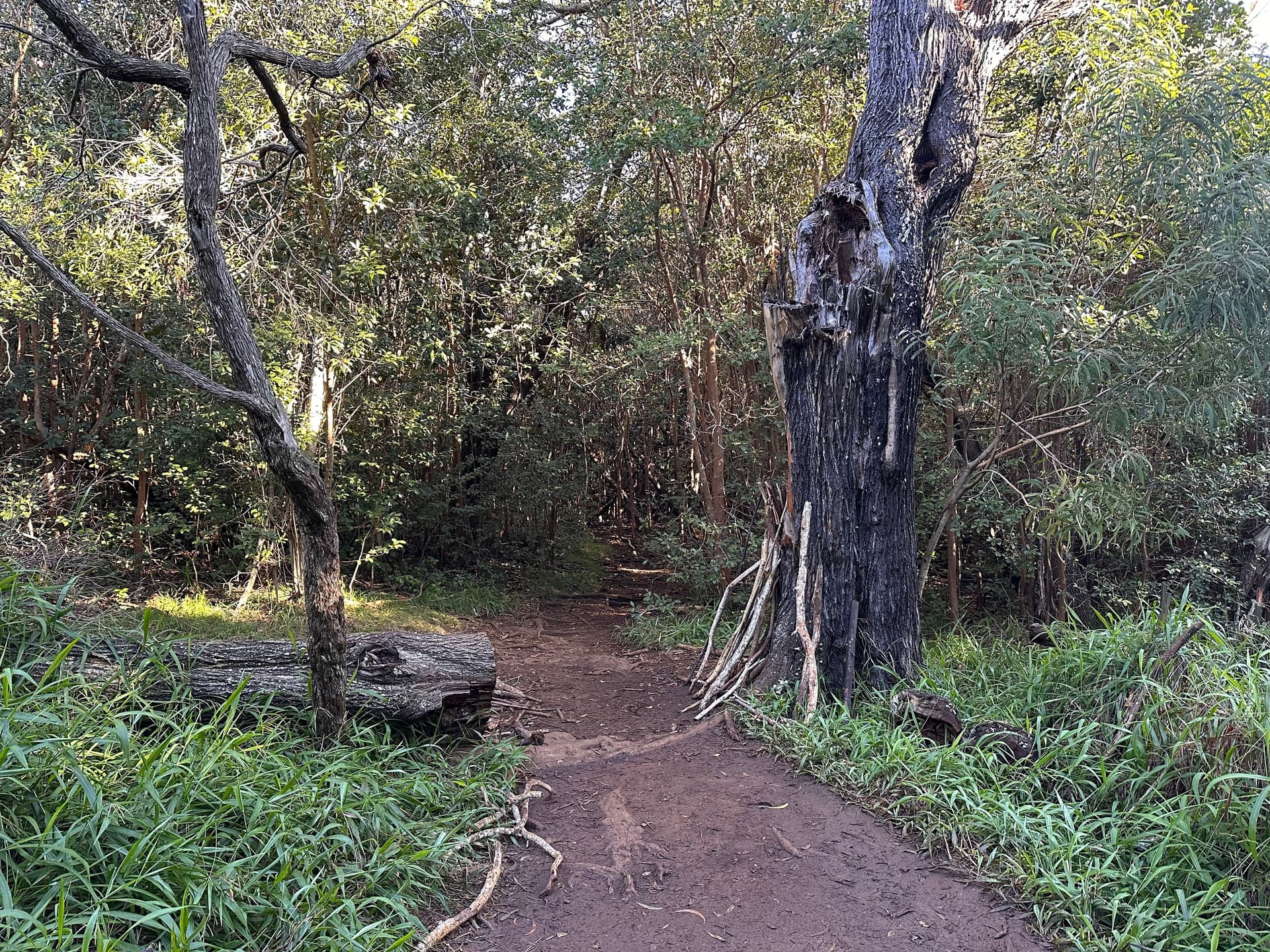
Waimea Canyon Trail hike trailhead at Pu'u Hinahina Lookout. Photo by Sarah Burchard.
Waimea Canyon Lookout: The most iconic viewpoint around mile marker 10. It’s a great spot for that first jaw-dropping panoramic view of the canyon.
Pu‘u Hinahina Lookout: Offers stunning views of the canyon and Niihau on a clear day.
Pu‘u Ka Pele Lookout: Located around Mile Marker 13 on Kōkeʻe Road between the Waimea Canyon and Puʻu Hinahina. Partial view of Waipoʻo Falls. Note: There is no parking lot for this lookout, visitors will need to find roadside parking. There is a picnic area with restrooms across the street.
Waimea Canyon is a hiker’s paradise, featuring deep valley gorges to explore. Whether you’re a seasoned trekker or a casual stroller, there’s something for everyone.
Waimea Canyon Trail to Waipo‘o Falls (3.6 miles round-trip): My personal favorite. It leads to a stunning waterfall and offers some of the most scenic vistas of the canyon.
Cliff Trail (0.4 miles round-trip): A short, family-friendly trail with amazing views.
Kukui Trail (5 miles round-trip): For experienced hikers looking to descend to the bottom of the canyon. Hike ends at Wiliwili Campsite.
Iliau Nature Loop (0.6 miles round-trip): An easy nature trail with views of the canyon.
Koaiʻe Canyon Trail (6 miles round-trip): A moderately difficult hike with archaeoloical sites and swimming holes.
Waipo’o Falls is a key attraction within Waimea Canyon State Park, offering scenic views that can be enjoyed from various lookouts along the canyon, such as Pu‘u Ka Pele Lookout. You can spot these picturesque 800-foot falls, located on the eastern side of the canyon, from afar or hike to the top via the Waimea Canyon Trail for a closer look.
See all
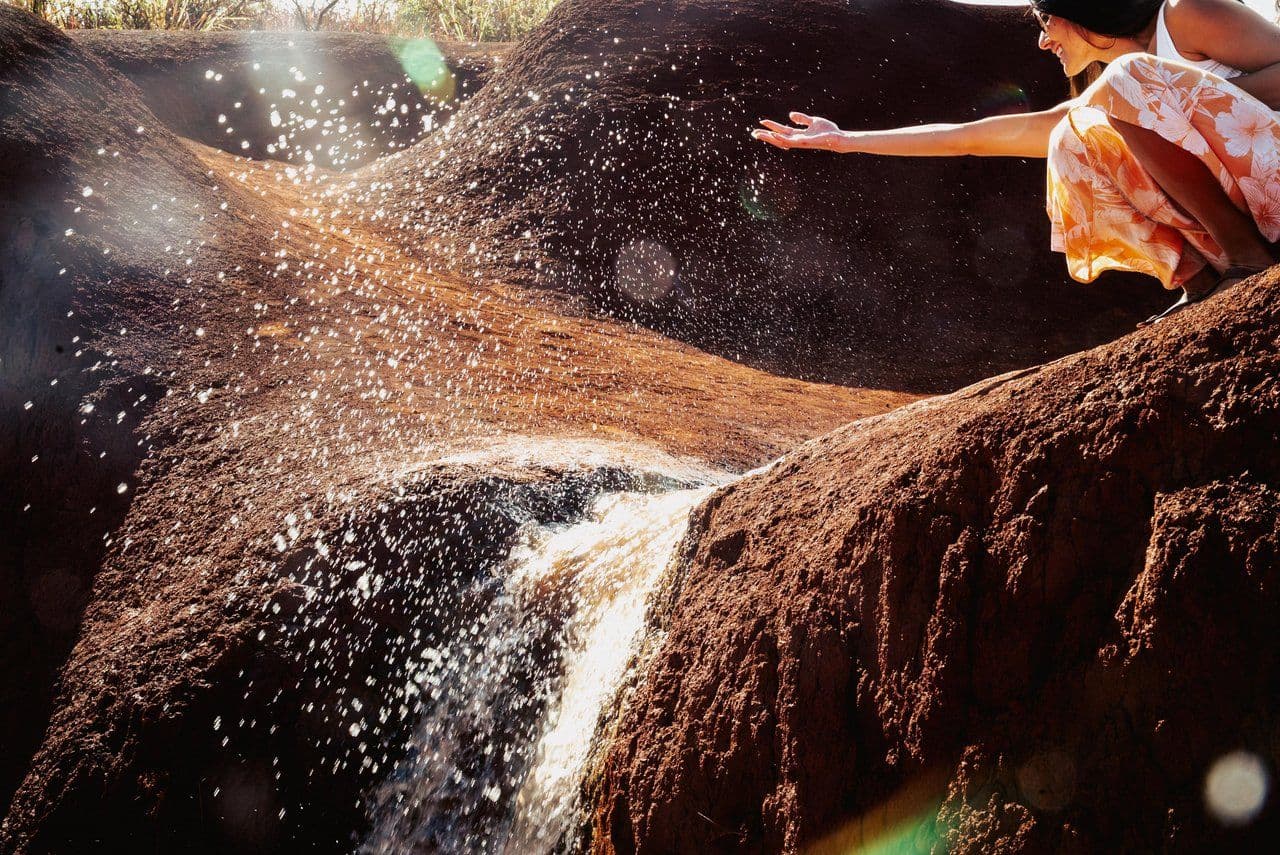
Waimea Canyon is a place of profound natural and cultural significance. Visiting responsibly ensures that it remains accessible and intact for generations to come. Here is what you need to know before you go.
Staying on designated trails is both a safety requirement and an act of respect. Going off trail damages Kauaʻi's fragile native ecosystem, which can take decades to recover from foot traffic. In the Hawaiian tradition, the land is sacred, and treading carefully is a matter of cultural as much as environmental responsibility.
Waimea Canyon receives an enormous amount of rainfall, much of it originating from the summit of Mount Waiʻaleʻale. Even on a sunny day at the canyon rim, heavy rain falling miles away can send a wall of water rushing through the canyon floor with little warning. If you are hiking to the bottom of the canyon or crossing streams, pay close attention to weather conditions and be prepared to move to higher ground quickly. Do not attempt to cross streams that are running high or fast.
Do not remove anything from the park, including rocks, plants, flowers, soil, etc. This is not only a matter of environmental protection but also Hawaiian law and tradition. Leave everything exactly as you found it.
Do not feed any animals, including the nēnē, Hawaiʻi's endangered state bird, which can sometimes be spotted near the lookouts. Feeding wildlife disrupts their natural behavior, makes them dependent on humans and can be harmful to their health. Observe animals from a respectful distance and never approach or attempt to touch them.
Kauaʻi's native forests are under constant threat from invasive species introduced on footwear and gear. Before hitting any trail, clean your shoes at the designated shoe cleaning stations located at trailheads. This simple step helps prevent the spread of invasive plants, fungi and pathogens that can devastate native ecosystems.
Waimea Canyon sits on land that has been sacred to Native Hawaiians for centuries. Puʻukāpele, the canyon's highest peak, is from a cinder cone named after the goddess Pele. The canyon and the river that carved it are woven into the history, mythology and identity of Kauaʻi. Approach your visit with humility and gratitude.
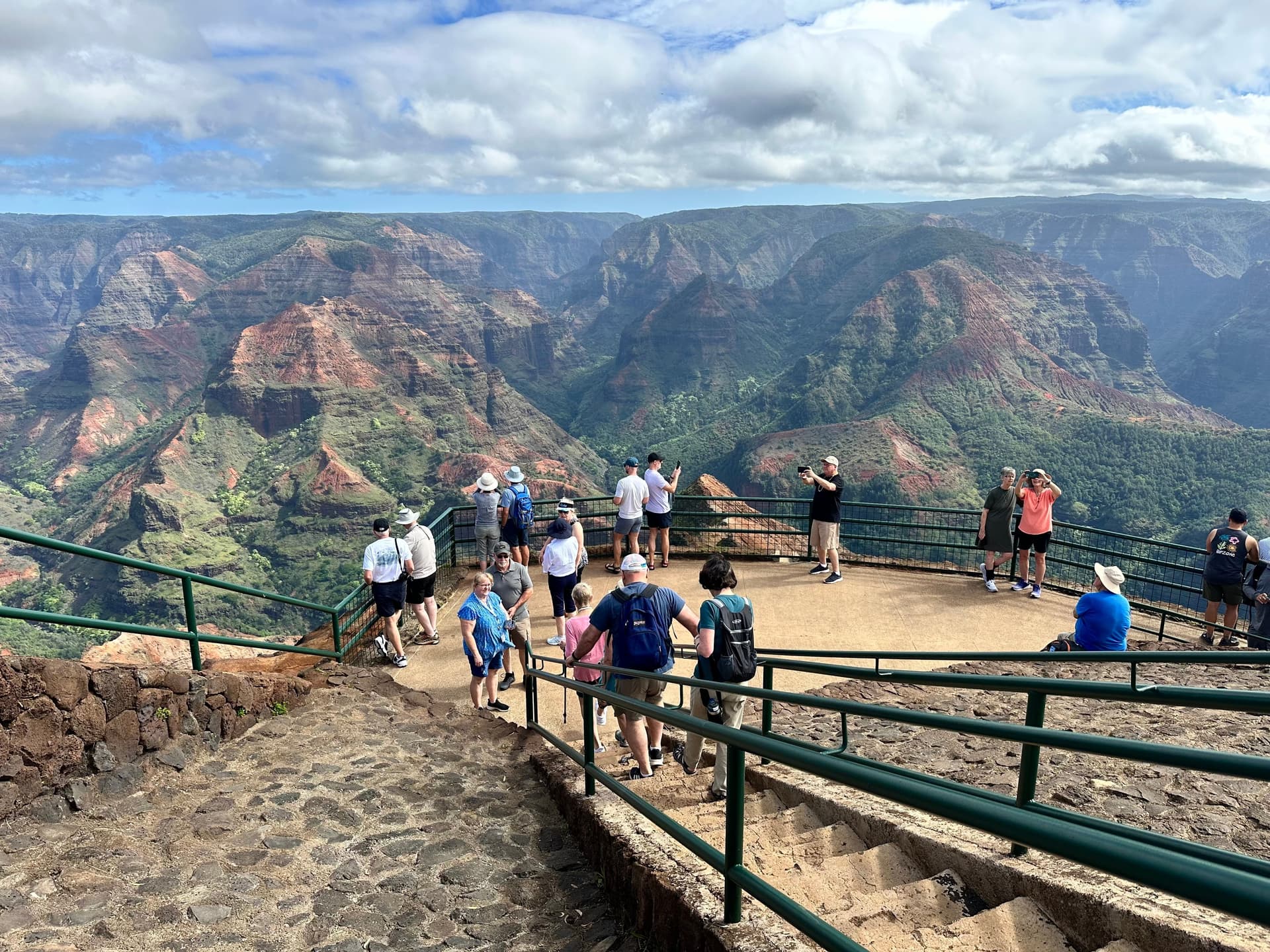
Waimea Canyon Lookout in February. Photo by Sarah Burchard.
The best time to visit Waimea Canyon State Park is during Kauaʻi's dry season, which runs roughly from April through October. Here is what to expect across seasons, times of day and crowd patterns so you can plan the visit that works best for you.
During the dry season, skies over the canyon tend to be clearer and the roads more accessible. The West Side of Kauaʻi is naturally drier than the rest of the island, which works in your favor during summer months. Temperatures at the rim of the canyon hover around 65 to 70 degrees during the day, but mornings and evenings can dip into the 50s, so always bring a jacket.
The wet season, November through March, brings more rain, more clouds and a greater chance of trail closures and road delays due to flooding and erosion. That said, the wet season has its own rewards, including more dramatic waterfalls and less people. If you visit during the winter months, check the Hawaii Department of Land and Natural Resources website at dlnr.hawaii.gov for current park conditions before heading out, as temporary closures can happen with little notice.
Morning is the best time to visit Waimea Canyon State Park. It's ideal for photography, clearer views of the canyon and more available parking. By midday, clouds begin to form and lookout views can get socked in by fog. Plan to arrive at the park by 8 a.m. and be off the trails and back in your car well before dark. Trail conditions become dangerous after sunset and the park road is pitch black at night.
Weekends, particularly during the summer months and around holidays, bring the heaviest crowds. Parking at the major lookouts fills quickly and the narrow road through the park can back up with rental cars. If you visit on a weekend, arrive early — ideally before 8 a.m. — to secure parking and beat the rush.
Weekdays are generally less crowded and offer a more peaceful experience on the trails and at the lookouts. However, ongoing roadwork along Waimea Canyon Drive and Kōkeʻe Road can cause significant delays on weekdays, especially during morning hours. On weekends, roadwork crews are typically not operating, but you may still experience traffic due to a higher number of visitors.
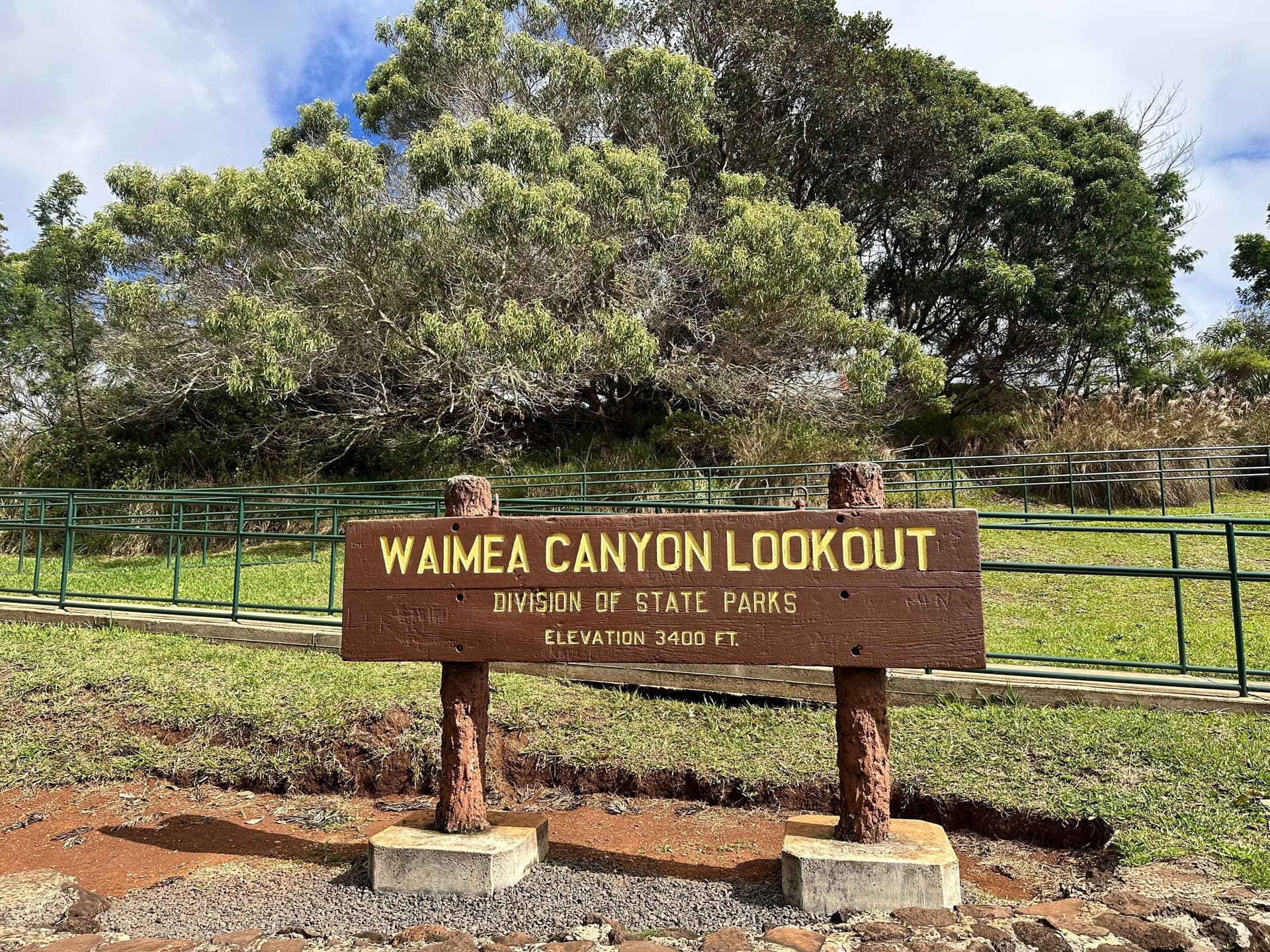
Photo by Sarah Burchard.
How much time you spend at Waimea Canyon State Park depends on what you want to do. Here is a general guide:
A quick scenic drive with stops at the main lookouts takes about one to two hours.
To stop at all the lookouts, enjoy a picnic and do one short to moderate hike such as the Waimea Canyon Trail or the Iliau Nature Loop, plan to be at the park for 3 to four hours.
To explore both Waimea Canyon State Park and Kōkeʻe State Park, hike a longer trail, visit the Kōkeʻe Natural History Museum and still have time to stop at the lookouts, you'll need at least six to eight hours.
If you plan to do any hiking beyond a short nature loop, budget at least a half day. The drive alone takes time, and rushing through the park means missing what makes it special.
Dress in layers. Even if it is warm and sunny on the coast, temperatures at the canyon run about 20 degrees cooler than at sea level. Bring a light rain jacket, regardless of time of year.
Wear closed-toe hiking shoes with good traction. Many of the trails involve uneven terrain, loose rocks and stream crossings where your shoes will get wet and muddy. Sandals and flip-flops are not appropriate for hiking here. If you are only doing a scenic drive and staying at the lookouts, comfortable walking shoes are fine.
Pack sunscreen, a hat and sunglasses. Some spots are particularly sunny and unshaded.
Bring at least one liter of water per person. The water at the park is not potable at most locations, so bring everything you need from town.
Snacks or a picnic lunch. Especially, if you are going on a hike.
Waimea Canyon State Park is a wonderful destination for families, with a few things to keep in mind. The lookout points are accessible by car and offer great views with minimal walking, making them ideal for young children or families with strollers. The Iliau Nature Loop is a short, relatively flat 0.3-mile trail suitable for older children and offers signage about native plants along the way.
For older children and teenagers, the Waimea Canyon Trail is a manageable moderate hike with rewarding views. The full trail to the top of Waipoʻo Falls takes about two to three hours round trip. Bring plenty of snacks and water, as children tend to tire faster at elevation.
Remember to keep children away from the edges at all lookout points, as there are steep drop-offs and not all areas have guardrails. Do not allow children to wade in streams after rain, as flash flooding can occur with little warning. Strollers are not recommended on any of the hiking trails.
Waimea Canyon State Park has limited accessibility options for visitors with mobility considerations, however the scenic drive is fully accessible by car, and the paved overlook area at Waimea Canyon Lookout is accessible for visitors using wheelchairs or walkers.
Restrooms at Puʻu Ka Pele picnic area, located across from Puʻu Ka Pele Lookout, are ADA accessible.
The hiking trails within the park are not wheelchair accessible. Most involve uneven, unpaved terrain, steep grades and stream crossings that present significant challenges for visitors with limited mobility. The Iliau Nature Loop is the most manageable of the trails for visitors with mild mobility concerns, but even this trail has some uneven sections.
Visitors with mobility considerations are encouraged to call the Hawaii Division of State Parks at (808) 274-3444 before their visit to confirm current conditions and accessibility at specific areas of the park. Arriving early is also recommended, as accessible parking spaces at the lookouts are limited.
See all
Join our newsletter for travel inspiration, insider tips and the latest island stories.
By subscribing, you agree to receive emails from Hawaii.com. You can unsubscribe anytime. See our Privacy Policy.