

The Complete Guide to Polynesian Cultural Center
Our guide to Polynesian Cultural Center in Lāʻie, Oʻahu includes everything you need to know, including what youʻll see, how long youʻll be there and differences between ticket packages.
If you have ever driven the coastal Kamehameha Highway to the North Shore, you have probably noticed the 42-acre Polynesian Cultural Center in Lāʻie on Oʻahu. I lived here for nine years and had never been inside. Recently, however, I had the opportunity to experience the center’s Aliʻi Lūʻau Package with my Oʻahu-born boyfriend, who had not visited since elementary school, and we had so much fun.
With multiple ways to visit the center — there are six different packages — and so much to see, it helps to know what you are getting into before you go. This guide covers everything you need to know, including what you will see, how long to plan for your visit and the differences between the ticket packages.
What is the Polynesian Cultural Center?

The Polynesian Cultural Center, or PCC, is a nonprofit theme park owned by The Church of Jesus Christ of Latter-day Saints. According to PCC, the park opened in 1963 as a way to perpetuate Polynesian cultures while supporting students at Brigham Young University–Hawaiʻi, located next door. PCC is considered a sister entity to the university, and its students make up about 80 percent of the park’s staff. Since opening, the park has welcomed more than 40 million visitors.
Spread across 42 acres, the park features six island villages representing Samoa, Tonga, Fiji, Aotearoa, Tahiti and Hawaiʻi. Each village immerses visitors in the culture, traditions and daily life of its people. Laborers from several countries volunteered to help build PCC, including the villages, tropical landscaping and lagoons that wind throughout the property, which was once wetland taro fields.
The first thought I had upon entering PCC was that I felt like I was at Disneyland. That reaction was intentional. Dave Hannemann, PCC’s director of operations, visited Disneyland before PCC opened to study what made it successful. He modeled the park after the “Happiest Place on Earth,” giving PCC that same sense of excitement and wonder the moment you walk through the gates.
Combined with Polynesian hospitality, where staff members welcome you as family, PCC is one of the most energetic and inviting attractions I have experienced in Hawaiʻi.
What You’ll See & Do

Huki Canoe Show (12:40 p.m. only)
This show runs once daily and serves as a welcome and introduction to the park. Guests sit along the canal as performers drift by in canoes, offering a preview of the dance styles represented by each island village at PCC. Huki means “to pull” but can also mean “to gather.”

Island Villages
Each Island Village hosts multiple presentations from 1 to 5 p.m. featuring dance, singing, drumming and demonstrations of traditional arts and crafts. At the Samoa Island Village, we gathered inside a traditional chiefs meeting hut where performers explained customs including tattooing and daily responsibilities divided by gender. They demonstrated how to make fire using only two sticks and a dried coconut husk.
The presenters were not only informative but also genuinely funny, making the experience feel more like a comedy show. Kap, a 54-year-old performer who was already working at PCC when my boyfriend visited 25 years ago, had the audience in tears with his dry humor. Even more impressive than his jokes or stomping out the coconut-husk fire with his bare feet was what came next. Outside, Kap and another performer who appeared half his age scaled two towering coconut trees in less than 20 seconds.
The presentation concluded in front of a large fire where Okinawan sweet potatoes had just finished cooking. Simmered with coconut milk, onion and sea salt, the potatoes were soft and sweet and everyone received a taste. That was just one presentation in one village. Each village offers multiple experiences and no two are the same, keeping us entertained all day.

Canoe Ride
The canoe ride is a relaxing way to see the park from the water and view each island village from a different perspective. Our guide shared interesting facts and kept the mood light throughout the roughly 15-minute ride.
Missionary Settlement
Designed to resemble an old schoolhouse, this exhibit explores Polynesian migration history and offers ʻukulele lessons, an introduction to ʻōlelo Hawaiʻi and more.
Iosepa Learning Center
Here, visitors learn about Polynesian wayfinding, see a traditional Hawaiian double-hulled voyaging canoe, practice sailing knots and explore navigation techniques.

Lūʻau
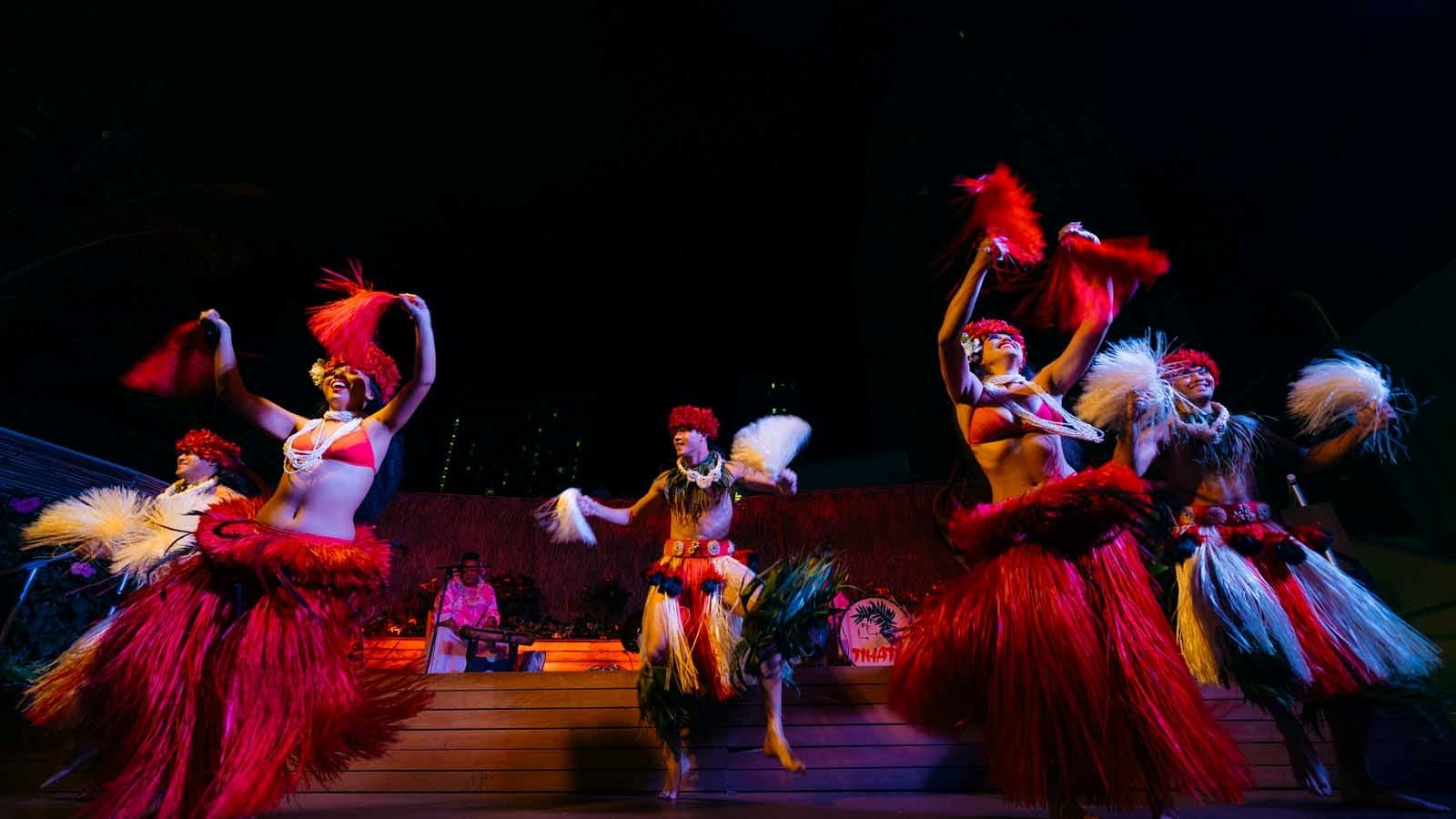
The Hawaiian lūʻau begins at 4:30 p.m. Guests watch staff pull a whole roasted pig from the underground imu before enjoying a buffet dinner accompanied by live Hawaiian music and hula.
Lāʻie Village and Temple Visitors’ Center Tour
This free shuttle operates from 3 to 6:40 p.m. and takes guests outside the park for a short tour of Lāʻie and Brigham Young University. The shuttle stops for 15 minutes at the Lāʻie Temple of The Church of Jesus Christ of Latter-day Saints, where visitors can walk through gardens filled with fountains and waterways.
Hawaiian Journey Theatre
This theater screens a 12-minute film titled Jeri, which follows Jeri Galeai competing in the 2019 World Fireknife Championship.

Hā: Breath of Life
PCC’s headliner show has been running since 2009 and features original music. Beginning at 7:30 p.m., the production tells the story of a boy named Mana growing up in Polynesia and being shaped by different island cultures at each stage of life. Dancers from each Island Village are represented. The show culminates with fireknife dancing set against a dramatic backdrop resembling a mountainside complete with waterfalls and tropical rainforest.
Music at the Gazebo
Live performances by local musicians take place daily from 6 to 7:20 p.m.
Additional Places to Eat
- Hukilau Lunch Buffet
- Pounders Restaurant, seafood and island-style cuisine
- Gateway Buffet
- Elsie’s Smoothie Shack, acai bowls and smoothies
Tita’s Grill, local-style barbecue
Beachside Shave Ice
Shaka Shake Korean BBQ
Sweet As, real fruit ice cream
Hapas Sushi and Poke - Additional snack stands are located throughout the park.
Shops
Hapa Home Shop
Hukilau Store
Kap’s Art and Culture
Nona’s Apparel
Goo’s Plantation Gift Shop
Christmas Store
BYU–Hawaii Store
Ukulele Experience Shop
To Lūʻau or not to Lūʻau?

If you purchased a package such as the Aliʻi Lūʻau that includes dinner, it is a nice way to round out your PCC experience. Guests watch staff pull a whole roasted pig from the imu, or underground oven, enjoy live Hawaiian music and hula and sit down to a large all-you-can-eat buffet. Each guest also receives a bottomless non-alcoholic piña colada smoothie served in a pineapple.
What’s on the buffet
- Imu puaʻa - Whole pig roasted in an underground oven
- Teriyaki brisket
- Pipikaula - Marinated and dried beef
- Crispy garlic shrimp
- Huli huli chicken - Marinated chicken cooked over a rotisserie fire. Huli huli means “turn turn.”
- Moa with ʻōpu -Chicken and squash inspired by a traditional Hawaiian dish of chicken stuffed into a gourd and cooked in an imu.
- Pan-seared local fish
- Whole steamed Kona kampachi
- Five kinds of poke - ʻAhi shoyu, spicy ʻahi, shrimp, tako (octopus) and kimchi tako
- Pulehu broccoli - Marinated and grilled
- Vegetarian hekka - Rice noodles with stir-fried vegetables
- ʻUala Hasselback - Sweet potatoes roasted with butter and spices
- Roasted ʻulu - Breadfruit
- Kabocha squash - Stir-fried with local watercress
- Vegetarian fried rice
- Steamed white rice
- Full salad bar
- Lomi lomi salmon - A local dish similar to pico de gallo made with cured salmon.
- Pickled limu and cucumbers - A local seaweed salad.
- Tofu poke
- Okinawan sweet potato salad
- Assorted fresh fruit
- Poi
- Taro rolls
Desserts include an assortment of gelato, lilikoʻi-lychee posset, coconut-chocolate truffles, koelepalau crinkle cookies, haupia kulolo meringue and pineapple crème brûlée. A variety of non-alcoholic beverages is also available.
I recommend booking the Aliʻi Lūʻau package if you want a complete PCC experience without having to watch the clock to make sure you arrive on time for performances. That said, there are plenty of other dining options throughout the park and the lūʻau can be skipped.

Who should book the lūʻau
If you have never experienced a lūʻau, I recommend it for the cultural elements, especially watching the pig emerge from the imu and sampling traditional foods such as poi, ʻuala and ʻulu. It is also a good value for the amount of food included.
Who can skip it
If you have attended a lūʻau before, this one is optional. The food is plentiful and the buffet offers a solid selection of local dishes, but the fish was overcooked and most of the proteins, aside from the poke, were just average. Performance-wise, Hā: Breath of Life is far more dynamic and memorable than the hula presented during the lūʻau.
How Long to Plan For

Plan to spend an entire day at the Polynesian Cultural Center, from opening to close. There is simply too much to see to make a half-day visit worthwhile. While a nine-hour day may sound long, the constant movement from one attraction to the next makes the time pass quickly. At no point did I find myself wondering when it would be over, nor did I feel exhausted or worn down.
The Aliʻi Lūʻau package we had the opportunity to experience struck an ideal balance between activity and downtime, with a mix of walking, seated shows, snacks and built-in rest periods. Rushing through PCC diminishes the value of your ticket and makes the long drive from town less worthwhile.
- Plan to be at PCC from noon to 9 p.m.
To experience everything the park offers, plan your day around these anchor events:
- 12:40 p.m. Huki Canoe Show
- 4:30 p.m. Lūʻau
- 7:30 p.m. Hā: Breath of Life
In between these shows, you can explore the Island Villages and additional attractions at a relaxed pace.
Tickets & Packages

High-tier packages
- Cost: Adult $293.95, Child (4-11) $234.96
- Includes:
- Private tour of 6 island villages with reserved seating
- Canoe ride
- Dinner at Aliʻi Lūʻau buffet with live entertainment
- Platinum level seating at the Hā: Breath of Life show
- Can visit PCC two more times free
- Cost: Adult $197.95, Child (4-11) $157.96
- Includes:
- Group tour of 6 island villages with reserved seating
- Canoe ride
- Dinner at Aliʻi Lūʻau buffet with live entertainment
- Gold level seating at the Hā: Breath of Life show
- Can visit PCC two more times free
The main difference between the Super Ambassador and Aliʻi Lūʻau packages is privacy. The Super Ambassador tour is private, while the Aliʻi Lūʻau tour is conducted in small groups. If you do not mind touring with other guests, the Aliʻi Lūʻau package offers excellant value.
I recommend choosing a higher-tier package. While these tours follow a set schedule, the itinerary is thoughtfully designed to ensure you experience the park’s highlights without feeling rushed. You also receive return access, allowing you to revisit the park up to two additional times to catch anything you missed. That could include Island Village activities, dining options, shopping or simply exploring the grounds at your own pace.
Lower tier packages
- Cost: Adult $157.95, Child (4-11) $126.96
- Includes:
- Island Villages
- Dinner at Gateway Buffet with live music
- Silver level seating at the Hā: Breath of Life show
- Can visit PCC two more times free
Lūʻau & HĀ: Breath of Life Show
- Cost: Adult $138.95, Child (4-11) $110.96
- Includes:
- Does not include Island Villages
- Dinner at Aliʻi Lūʻau buffet with live entertainment
- Gold level seating at the Hā: Breath of Life show
Islands of Polynesia & Hā: Breath of Life Package
- Cost: Adult $123.95, Child (4-11) $98.96
- Island Villages
- Bronze level seating at the Hā: Breath of Life show
- Can visit PCC two more times free
Islands of Polynesia
- Cost: Adult $94.95, Child (4-11) $75.96
- Island Villages only, no meal
- Can visit PCC two more times free
BOOK A PACKAGE
Transportation & Location

- Address: 55-370 Kamehameha Hwy, Laie, HI 96762
- PCC is over an hour drive from Waikīkī
- For an additional charge, PCC provides transportation from Waikīkī
- Standard Transportation (recommended) - $28
- Includes:
- Pick up in Waikīkī at 10:30 a.m.
- Comfortable ride in a high-end motor coach with local tour guide narration
- Returns to Waikīkī at 10:30 p.m.
- Includes:
- Circle Island Tour Transportation - $78
- Sightseeing tour of scenic and historical sites before arriving to PCC
- Comfortable ride in a high-end motor coach with local tour guide narration
- Includes three stops
- Pick up in Waikīkī at 6:45 a.m. (arrives at PCC at 12:30 p.m.)
- Returns to Waikīkī at 10:30 p.m.
- Address
- 55-370 Kamehameha Hwy, Laie, HI 96762
Who It’s Best For

If you’ve been wondering whether you should reserve one of your vacation days for PCC, I say “Yes!” It’s touristy, sure, but it’s so much fun and you will learn a lot about Polynesian cultures.
This experience is great for:
- Families
- First-time visitors
- Travelers interested in learning about history and different cultures
- Kids
Who Might Want to Skip It
- If you are only on Oʻahu for a short trip (1-3 days)
- Budget-focused travelers
- Visitors expecting a quick stop
Additional tips

- It can get hot in Lāʻie, wear sunscreen and a hat and bring a hand fan (optional)
- Pack a small umbrella or light rain jacket in case it rains
- Bring a water bottle
- Wear comfortable shoes and layers
- Eat an early lunch before arriving to the park at noon
- Although there are snack shacks throughout the park, there is only one meal included with ticket packages and it is not until 4:30 p.m.
This reporter was hosted by Polynesian Cultural Center for the purposes of this review.