Hawaii LogoHawaii Logo

Home

/

Blog & guides

/

Guide to Whale Watching in Hawaiʻi

Guide to Whale Watching in Hawaiʻi

By Hawaii.com Team

Whale tail in the ocean

Photo by Mike Ledray (Shutterstock).

The sun-kissed waters surrounding Hawaiʻi’s picturesque islands hold a secret that captivates locals and tourists alike — the awe-inspiring presence of humpback whales.

As the winter chill descends upon the northern hemisphere, these gentle giants embark on an epic journey to the warm embrace of Hawaiʻi’s tropical seas. Join us on a mesmerizing adventure as we delve into the enchanting world of humpback whales, exploring their incredible migration, unique behaviors and the profound impact they have on Hawaiʻi’s ecosystem.

Activities Nearby

See all

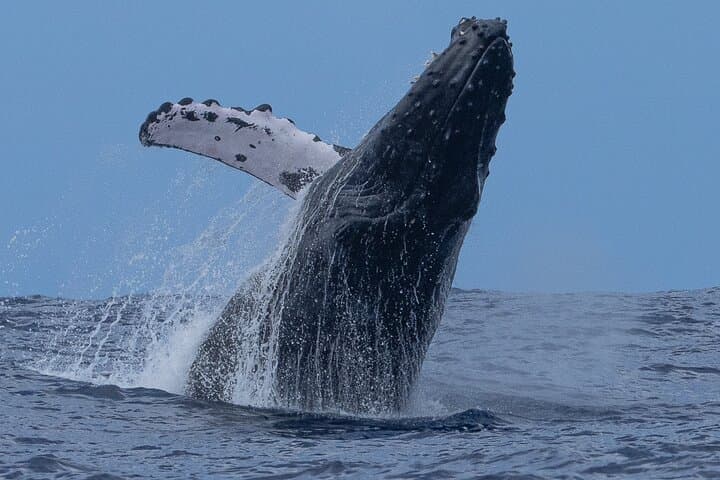
Whale breaching in the ocean.

Courtesy of Ko Olina.

Why do Humpback Whales Head to Hawaiʻi?

Humpback whales, scientifically known as Megaptera novaeangliae, are true globetrotters. Every year, they embark on one of the longest migration journeys of any mammal, covering thousands of miles from their feeding grounds in cold, nutrient-rich polar regions to the warm waters surrounding the Hawaiian islands.

The annual pilgrimage is quite the spectacle, drawing thousands of visitors who eagerly await the opportunity to witness these magnificent creatures up close.

Hawaiʻi's warm, shallow seas serve as an ideal environment for whales giving birth and nursing their young calves. The calving grounds offer protection from natural predators, making it a safe haven for the newborns during their most vulnerable stages of life.

Humpback Whale Courtship and Song

Once in Hawaiʻi, the humpbacks engage in fascinating courtship rituals that include breaching, tail slapping and intricate vocals.

The males compete fiercely for the attention of females through acrobatic displays, launching their colossal bodies out of the water and creating enormous splashes. However, it is their enchanting songs that truly captivate the hearts of those who have the privilege of hearing them.

Humpback whales are renowned for their melodious tunes, believed to be one of the most complex and evocative forms of communication in the animal kingdom. These hauntingly beautiful songs can travel for great distances, echoing across the ocean’s depths. Scientists are still decoding the purpose behind these vocalizations, but they are thought to play a significant role in mating rituals and establishing territory.

Preserving Hawaiʻi’s Ocean Giants

The presence of humpback whales in Hawaiʻi is not only a remarkable natural wonder but also a poignant reminder of the interconnectedness of our planet’s ecosystems. The whales’ annual migration highlights the importance of preserving both their breeding and feeding grounds to ensure the continuity of their species.

Thankfully, conservation efforts in Hawaiʻi have been instrumental in protecting these magnificent creatures. Whale-watching tours and water-based activities adhere to strict guidelines to prevent disturbances and maintain a safe distance from the whales, ensuring their natural behaviors are not disrupted. Additionally, local organizations work tirelessly to educate the public about the critical role humpback whales play in maintaining a balanced marine environment.

Humpback whales are not only guardians of the oceans but also ambassadors of awareness, inspiring people around the world to take action against threats such as climate change and ocean pollution. Through collective efforts, we can secure a brighter future for these incredible giants of the sea.

More Whales in Hawaiʻi’s Waters

Humpback whales are not the only whales that can be found in Hawaiʻi’s waters. Several other whale species can also be spotted in Hawaiian waters throughout the year.

Hawaiʻi’s warm and nutrient-rich waters make it a diverse and rich habitat for various marine life, including different species of whales. Some of the other whale species that can be found in Hawaiʻi’s waters include:

Sperm Whales: Sperm whales are deep-diving whales and are often seen in the offshore waters of Hawaiʻi. They are the largest toothed whales and are known for their distinctive square-shaped heads and impressive diving abilities.

Bryde’s Whales: Bryde’s whales are relatively common in Hawaiian waters, particularly around the main islands. They are medium-sized baleen whales and are often observed feeding on small fish and krill.

Pilot Whales: Pilot whales, both short-finned and long-finned, can occasionally be spotted in the deeper waters of Hawaiʻi. These social and highly vocal whales tend to travel in large pods.

Melon-Headed Whales: Despite their name, melon-headed whales are actually a species of oceanic dolphin. They are occasionally seen in Hawaiian waters and are known for their playful behavior.

Killer Whales (Orca): Although not as common as the other species mentioned, there have been occasional sightings of killer whales in Hawaiʻi’s waters. These apex predators are known for their intelligence and complex social structures.

Cuvier’s Beaked Whales: Cuvier’s beaked whales are deep-diving whales that can be found in offshore waters. They are elusive and not often seen, but they are present in the region.

Whale Watching Tours

Officially, whale season in Hawaiʻi runs from December 15-May 15, although the first whale of the season is usually spotted sometime in early October. By the week after Thanksgiving, it’s common to find whales off of Maui or Lānaʻi as they breach and leap from the water — with many of the whales that arrive in November being males preparing for the show.

The Whale Season “Show”

That “show,” of course, is the North Pacific Humpback whale mating season that lasts for up to five months, where these 40-ton creatures swim south from Alaska to mate in Hawaiʻi’s warm waters. In total, that journey of nearly 3,000 miles takes six to eight weeks to complete, with Humpbacks attaining an average speed of three to five miles per hour.

By the peak of the season from January-March, thousands of Humpbacks have gathered in Hawaiʻi from Hilo to Hanalei, with the largest concentration of whales residing between Maui, Molokai, and Lanai. If you book a whale watching tour from Maui, experience the thrill of spotting a spout about 300 yards off the bow, and then motoring close for a front row view to the dramatic aquatic performance.

Getting “Mugged” in Hawaiʻi

Because the Humpbacks are protected, however, under the Marine Mammal Protection Act, it’s illegal for vessels to approach the whales any closer than 100 yards. That said, there’s always the hope that the boat will get “mugged” and the whale will decide to swim towards you — potentially ending up inches from your boat or swimming directly underneath.

If you’re lucky enough to get “mugged” in Hawaiʻi, admire the details of the Humpback’s body you can only see from up close — from barnacles growing beneath their fins to tubercles on top of their heads. On average, the North Pacific Humpback whales grow 40-45 feet, with female whales being slightly larger to accommodate nursing their young. Amazingly, after the calves are born here in predator-free Hawaii, they add to their weight by suckling on milk that’s approximately 40% milk fat — thereby gaining about eight pounds per hour as they prepare for the journey back north.

Whale Season Arguably the Best Time to Visit Hawaiʻi

Given the level of activity in the water, whale watching season in Hawaiʻi is arguably one of the most popular times to visit, and if you venture out on the water in winter on a whale watching tour or a kayak, be sure to have your camera ready and a healthy sense of adventure, since a time-stopping breach and a thunderous splash could happen at any moment.

Humpback Whale Facts

  • The humpback whale is the fifth largest of the great whales.

  • When preparing for a deep dive, humpbacks arch their back and raise their tail flukes above the water. The whale’s arched back appears above the water as it dives. It is this arching that has earned the humpback whale its common name.

  • A humpback’s pectoral (side) fins can be up to 15 feet long.

  • Adult female humpbacks can be up to 45 feet long; males are generally 42 feet long.

  • A mature humpback can weigh up to 40 tons (80,000 lbs).

  • Baby humpbacks (calves) are generally 10 to 15 feet long and average 3,000 pounds at birth.

  • Humpbacks swim tremendous distances during their migrations: up to 7,000 miles round-trip between their summer feeding areas of the North Pacific and their winter breeding grounds in Hawaiʻi.

  • In 1997, the Hawaiian Islands Humpback Whale National Marine Sanctuary was one of 13 national marine sanctuaries created under the U.S. Marine Protection, Research and Sanctuaries Act. This sanctuary supports management, research, education and long-term monitoring for the endangered humpback whale and its winter breeding grounds in the Pacific.

Activities Nearby

See all

Love Hawaiʻi? Stay Connected.

Join our newsletter for travel inspiration, insider tips and the latest island stories.

By subscribing, you agree to receive emails from Hawaii.com. You can unsubscribe anytime. See our Privacy Policy.

Frequently Asked Questions About Travel to Hawaiʻi