

By Sarah Burchard
13 February, 2026
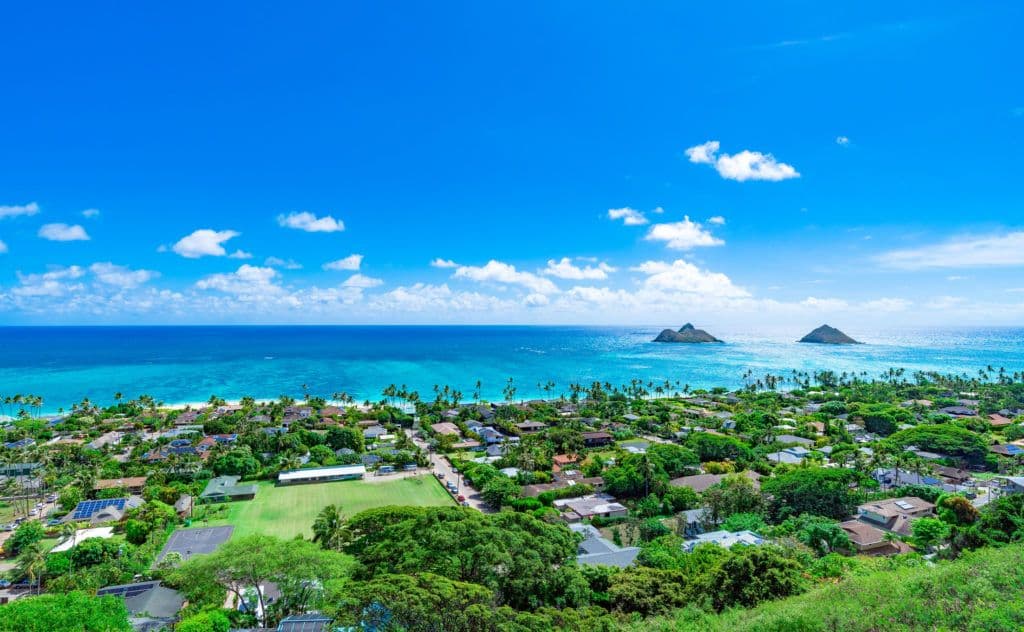
Photo courtesy of Getty Images.
Twelve miles northeast of Honolulu sits the residential community of Kailua. In ancient times, this area was prime agricultural land, a thriving ahupuaʻa, or Hawaiian land division, sustained by streams flowing from the Koʻolau Mountains. It was a place for fishing and farming, and a retreat for Hawaiian royalty.
Modern-day Kailua tells a different story, one of rapid postwar development. In the early 1950s, Harold Castle, owner of Kaneohe Ranch Company, began converting ranch lands into residential neighborhoods, positioning Kailua as Honolulu’s new suburb for postwar housing. After an aggressive marketing campaign, families began moving to the area and growth has continued ever since.
According to the Kailua Town website, the population grew from 7,700 in 1950 to more than 25,000 by 1960. Today, more than 40,000 residents call Kailua home, according to World Population Review.
With that growth has come tension. You may hear residents express frustration about visitors. An increase in vacation rentals, many clustered near the shoreline, has brought larger groups, heavier traffic and limited parking to residential streets. What was once a quiet seaside suburb is now a full blown tourist destination.
We do not actively promote visiting Kailua Beach or Kaʻōhao (Lanikai) Beach. Both areas face ongoing overtourism, and nearby residents bear the brunt of traffic congestion and parking shortages in their own neighborhoods. We understand many visitors will still choose to go. If you do, please do so responsibly.
Visit on weekdays and avoid weekends, when congestion is at its worst.
Spend time in Kailua Town shopping, dining and supporting local businesses.
Park only in municipal or designated public lots. Do not park in residential areas, block driveways or walk through private property.
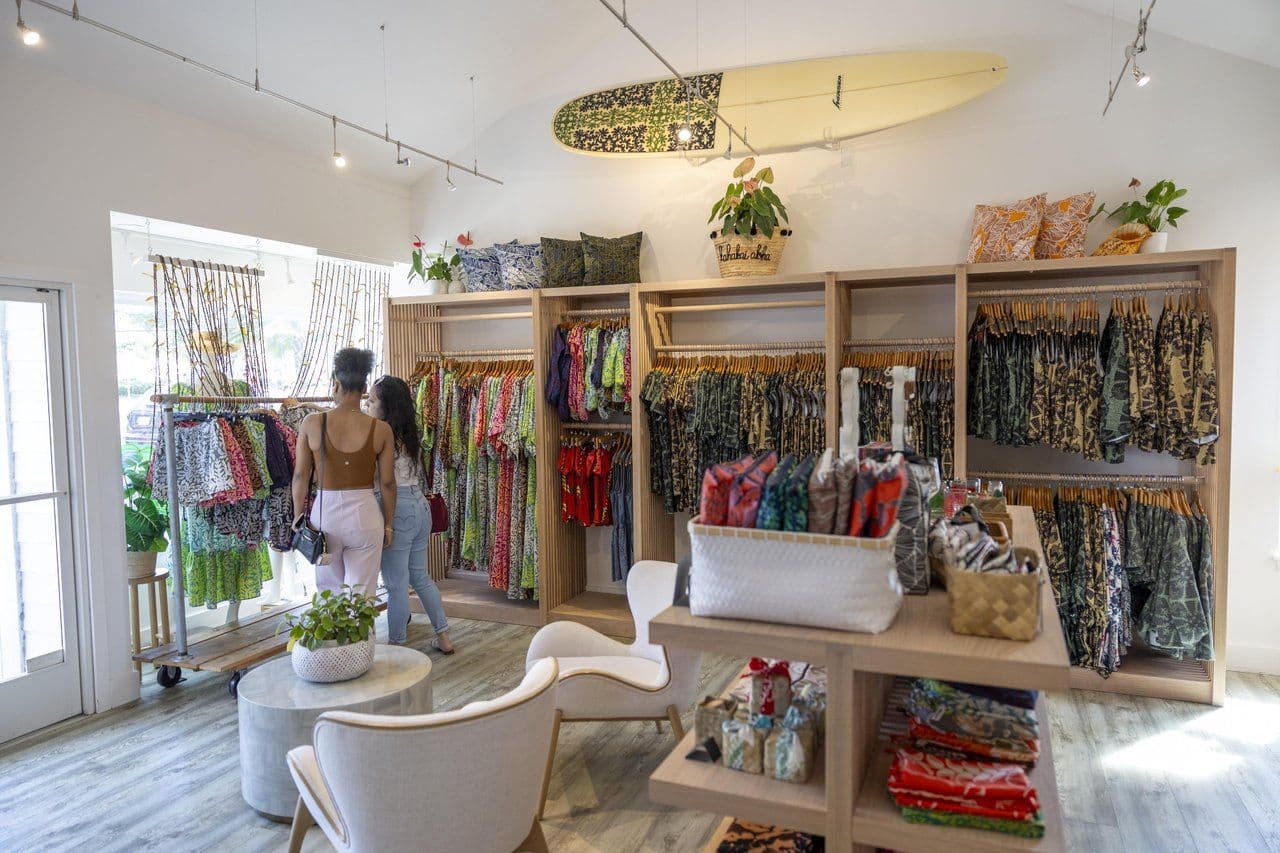
Shopping in Kailua. Photo by Marco Garcia.
Word to the wise when visiting this town: come hungry. Here are just a few of our favorite options.
22 Kailua - Exquisite poke bowls
Easy 'Que - Traditional smoked BBQ using local flavors
Faria - Pasifika Portuguese
Ganesh Dosa - Southern Indian food, specializing in doshas
Gaslamp - Speakeasy inside Kailua Town Pub & Grill
Goen - High-end Pan-Asian fare by chef Roy Yamaguchi
Kalapawai Market - Founded in 1932, this market offers gourmet sandwiches, take-out lunches, coffee, snacks and more. There are two locations, the Kailua Town location serves dinner too.
Moke's Bread & Breakfast - Classic breakfast joint with great pancakes
Over Easy - Elevated farm-to-table brunch
Please Come Again - Ice cream shop using local ingredients
For our shopping guide, visit: Best Places to Shop: Kailua.
See all
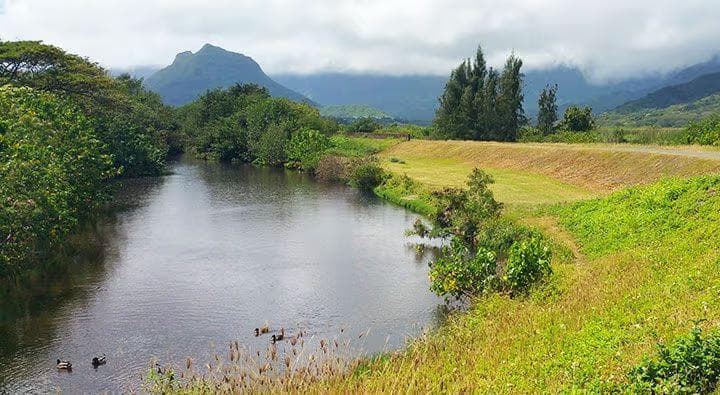
Kawainui Marsh, Kailua. Photo by Rasa Fournier.
Beyond the shoreline, Kailua also offers access to scenic hiking trails. The path along Kawainui Marsh is a favorite for biking and jogging. The route skirts one of Hawaiʻi’s largest wetlands, a landscape that once supported loʻi kalo, or taro fields, and fishponds used by some of Kailua’s earliest residents. Today it remains an important cultural and ecological area. Stay on marked paths and respect restoration efforts.
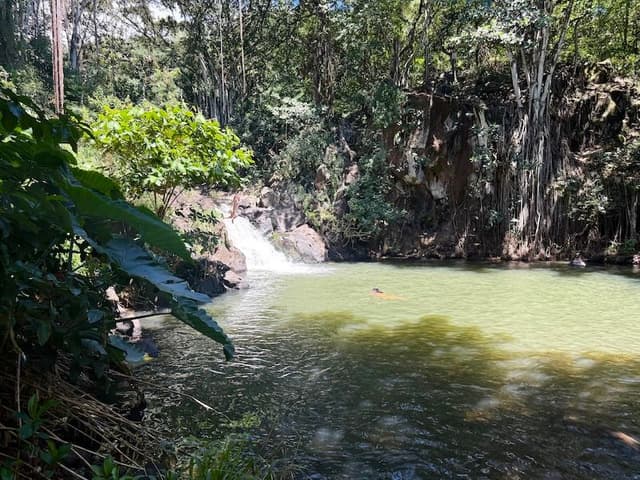
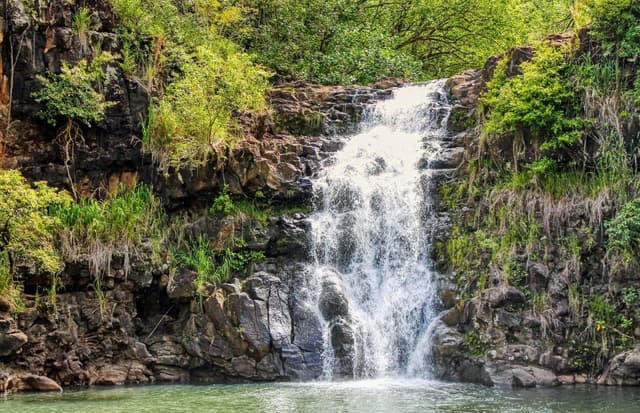
For a relatively easy waterfall hike, consider Likelike Falls. Trails can be muddy after rain, so proper footwear is essential. For a more advanced climb, the Olomana Trail is steep, exposed and recommended only for experienced hikers.
We do not recommend the Kaʻiwa Ridge Trail, often referred to as the Lanikai Pillbox Trail. In addition to chronic overcrowding and limited neighborhood parking, the initial ascent is steep and can be slippery. There are no guardrails at the summit, and strong winds are common. If you choose to hike anywhere in Kailua, go early, avoid weekends, pack out everything you bring in and prioritize safety.
See all
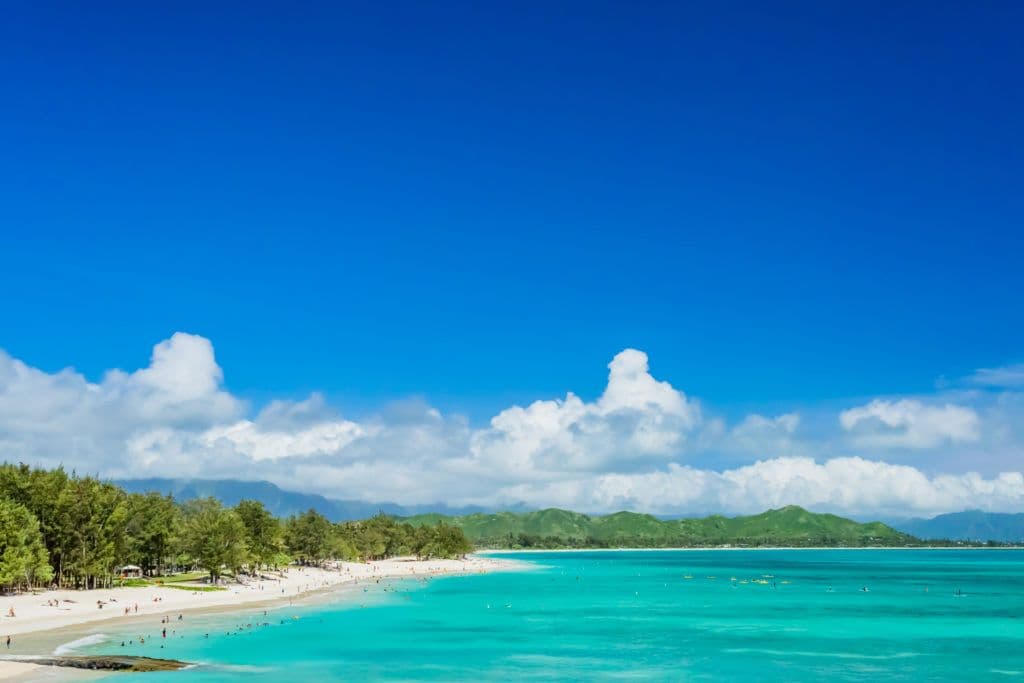
Photo: Getty Images
Kailua means “two seas” or “two currents,” a nod to the twin currents that meet offshore. A protective reef helps keep the waters relatively calm, with gentle waves and shallow areas good for swimming. The beach is covered in soft white sand with pockets of shade, and it remains a gathering place for local canoe clubs, which you will often see paddling offshore.
Steady tradewinds also make Kailua a popular spot for windsurfing and kitesurfing, with rentals and lessons available nearby. Conditions can be suitable for beginners and intermediate riders, depending on the day.
That said, Kailua Beach experiences heavy use, especially on weekends and holidays. If you choose to visit, plan for a weekday, arrive early and park only in designated public lots. The beach park has restrooms, outdoor showers, picnic tables and lifeguards on duty, but parking is limited and nearby residential streets are not overflow lots.
See all
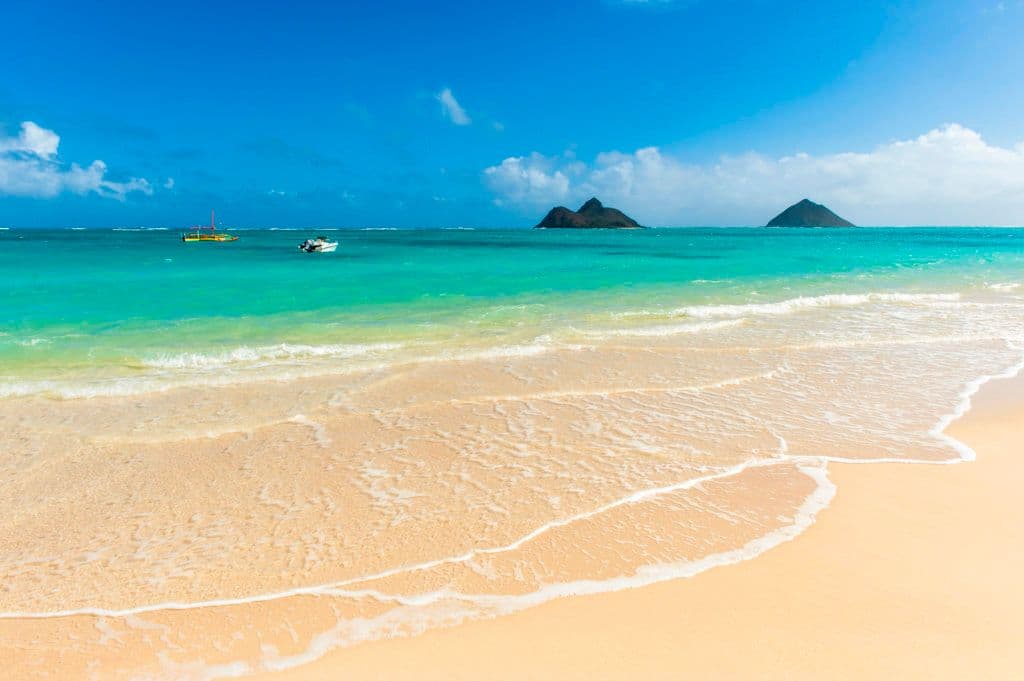
Photo by Getty Images.
Kaʻōhao (Lanikai) Beach is known for powdery white sand, calm turquoise water and unforgettable sunrise views. It is also one of the most impacted beaches on Oʻahu. Access is available only via marked public walkways between homes. There is no public parking lot, lifeguard or restroom facilities, and parking in surrounding residential streets remains a major issue for residents.
If you choose to visit, go on a weekday, arrive early and park only in legal, designated areas outside the neighborhood. Never block driveways or walk across private property.
Snorkeling is typically best near rocky areas and along the reef, conditions permitting. Offshore sit the Mokulua Islands, often called the Mokes. Experienced paddlers can kayak to the islands in about 30 to 45 minutes, depending on wind and surf. The islands are a protected seabird sanctuary. One island, Moku Nui, has a small beach that is open to the public, though access may be seasonally restricted to protect nesting birds.
Kayak rentals and guided tours are available in Kailua. For first-time paddlers, a guided tour is strongly recommended, as winds and currents can shift quickly. You may encounter Hawaiian green sea turtles in the water. Observe them from a distance and never approach or touch wildlife.
See all
Join our newsletter for travel inspiration, insider tips and the latest island stories.
By subscribing, you agree to receive emails from Hawaii.com. You can unsubscribe anytime. See our Privacy Policy.