

Beaches in Hawaiʻi
Which island for which kind of beach day — and how to stay safe in the water.

All of Hawaiʻi's beaches — from Oʻahu's “Seven Mile Miracle” to the lava-rock cliffs of Kohanaiki on Hawaiʻi Island — are open to the public, but that doesn't always mean they're easily accessible. Visiting Waiʻānapanapa's black sand beach on the Road to Hāna takes a reservation secured weeks out; parking for Maui's popular Kāʻanapali is a hassle unless you're staying at one of the resorts that front it; and on a budget you may not want to pay to park at all. Maybe you want to know which island is best for surfing, or snorkeling. There are beautiful beaches on every Hawaiian island, but not all are good for swimming — and some don't even have a sandy place to sit. Resort beaches have the most amenities and the calmest water, but also the biggest crowds. This guide will help you understand the variety of beaches on each island and figure out which is best for you.
Best Beach for the Job
The islands are different enough that the right beach depends on what you're after. Here are the picks across all four.

Best for first-timer families
Ala Moana (Oʻahu), Wailea (Maui), Poʻipū (Kauaʻi) and Hāpuna (Hawaiʻi Island) — all calm, lifeguarded and easy-entry, with parking and restrooms and close to hotels. Wailea ranks first for families on Maui's south shore; Hāpuna is the most classically beautiful of the four, with long white sand and a dramatic mountain backdrop.

Best for snorkeling
Hanauma Bay (Oʻahu) for a first-timer's protected reef — reservations sell out two days ahead at 7 a.m. Molokini (Maui) for open-water clarity up to 150 feet, tour-boat only. Tunnels (Kauaʻi) for an extraordinary reef in summer. Two Step (Hawaiʻi Island) for reef and turtles. If you can only snorkel once, take a tour to Molokini.

Best for sunset
Wailea (Maui) and Hāpuna (Hawaiʻi Island) both face west for unobstructed ocean sunsets with offshore-island silhouettes on the horizon. Keawaʻula (Yokohama) at Oʻahu's far western tip is one of the most spectacular, least-visited sunset spots in the state. Poʻipū (Kauaʻi) faces southwest and often has monk seals on the sand.

Best for photography
Waikīkī (Oʻahu) for the action, Diamond Head and golden-hour surfers; Waiʻānapanapa black sand (Maui) for jet-black sand against deep-green vegetation; Hanalei Bay (Kauaʻi) for the most classically beautiful beach landscape in the state; and Punaluʻu black sand (Hawaiʻi Island), where basking green sea turtles make the shot for you.

Best for big-wave spectating
The Banzai Pipeline, Waimea and Sunset on Oʻahu's North Shore, December through February — standing on the sand at Pipeline on a 15-foot swell is one of the most viscerally impressive things you can do in Hawaiʻi without entering the water. Peʻahi (Jaws) on Maui can reach 40-foot faces. Polihale on Kauaʻi offers powerful wave-watching with almost no one else around.

Most secluded
Keawaʻula (Yokohama) at the end of Oʻahu's Waiʻanae Coast; Polihale on Kauaʻi, several miles of dirt road past the highway below the Nā Pali cliffs; Makalawena on Hawaiʻi Island, a 1.5-mile walk across ʻaʻa lava; and Mākena on Maui past the state park's third entrance on a weekday.
You'll find a wide variety of easily accessible beaches on Oʻahu. World-famous Waikīkī is right off Kalākaua Avenue, walking distance from every hotel in Waikīkī and easy to reach by bus, Bikeshare or rideshare — you don't need a rental car unless you're exploring beyond Honolulu. The North Shore is where the big-wave surfing happens in winter; parking is free but hard to secure during international competitions and on weekend afternoons. In between are plenty of beaches with free parking and swimmable water. Oʻahu is best for Hawaiʻi first-timers and serious surfers.

For the resort-beach experience, come to Maui. Kāʻanapali and Wailea have soft white sand and gentle water and sit steps from the island's best hotels. Maui is also where you'll find especially photogenic beaches — the Waiʻānapanapa black sand beach, Hoʻokipa (for sea turtles) and forest-lined Mākena. Maui beaches are best for visitors who want the quintessential Hawaiʻi beach-resort experience.

Kauaʻi
Explore Kauaʻi Beaches →Kauaʻi isn't known for its beaches, but there are still plenty to choose from. Many visit Hanalei Bay for the photogenic pier and dramatic green backdrop of waterfall-streaked cliffs. There are resort beaches in Poʻipū, though they're not the best for swimming. What's cool about some Kauaʻi beaches — Keālia, for example — is that you can drive right onto them, loading up coolers and beach toys without hauling them from the car. Kauaʻi beaches are best for visitors who care more about the landscape than convenience.

Hawaiʻi Island (Big Island)
Explore Hawaiʻi Island Beaches →Many of Hawaiʻi Island's beaches aren't beaches at all, but lava-rock cliffs over the ocean — especially on the Hilo side. If you want white sand you can actually swim from, your best bet is the Hāpuna and Kohala Coast resort area, with a few more spots along the Kona Coast. Two Step on the south Kona coast is great for snorkeling, Kohanaiki (Pine Trees) is a popular surf break, and you'll almost certainly see turtles at Punaluʻu black sand beach. Hawaiʻi Island isn't really the lounging-on-the-beach island — for that we'd point you to Maui or Oʻahu.

Beach Safety in Hawaiʻi
The flag system at lifeguarded beaches is the first thing to read when you arrive. Green means low hazard — open water, manageable for average swimmers. Yellow means elevated caution — less confident swimmers should stay close to shore or out. Red means the beach is closed to swimming, an instruction, not a suggestion. Double red means the area is closed entirely. And if a beach has no flags because there's no lifeguard, that absence is itself the most important safety information you have.
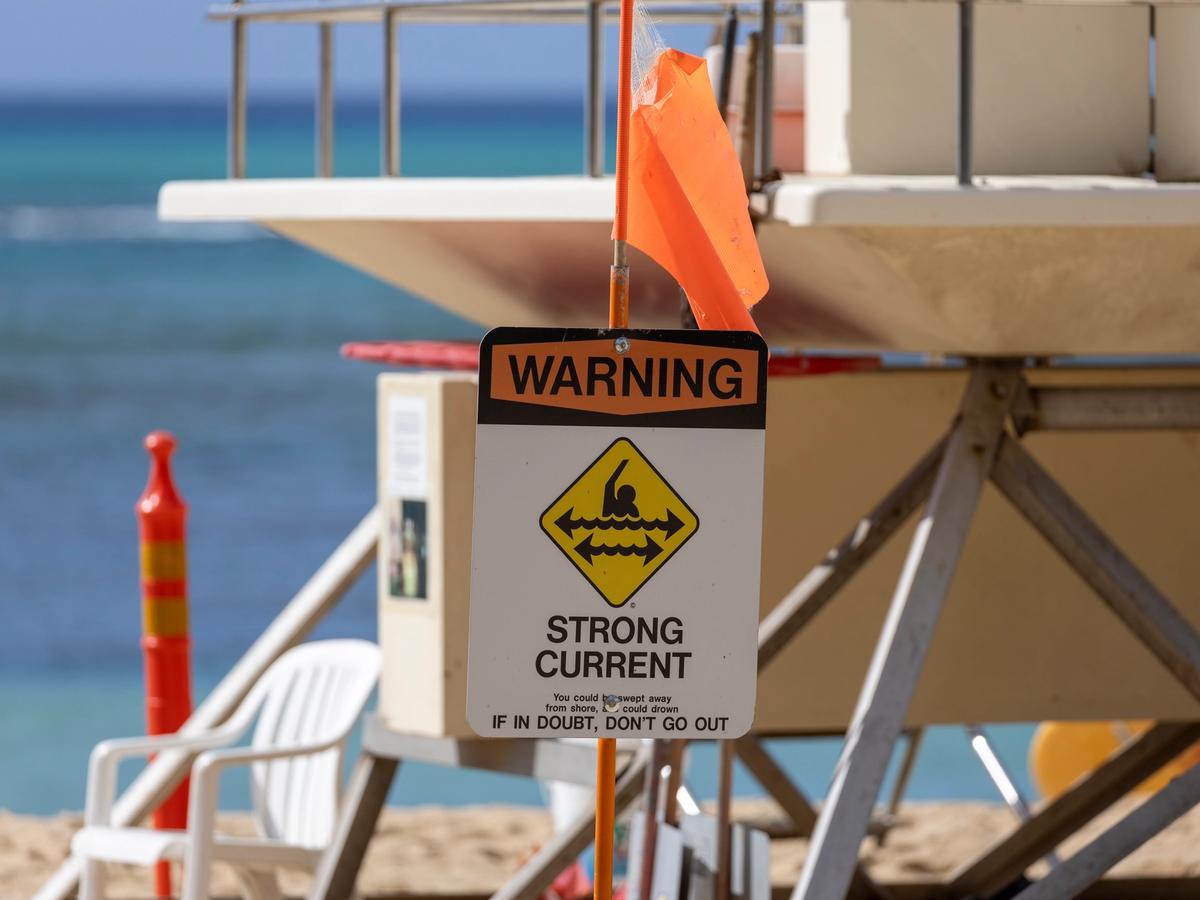
Hawaiʻi's drowning rates are among the highest in the country, and the two causes behind most of them — rip currents and shorebreak — don't look obviously dangerous to the untrained eye. Sandy Beach on Oʻahu and Mākena on Maui cause spinal injuries every year from shorebreak that appears gentle and is not: the wave breaks directly on the sand with sudden downward force. Go to Sandy's to watch the pro bodyboarders, not to get in the water. Rip currents — fast channels of water that pull you out during breaking waves — are present at beaches across every island. Never swim alone at an unfamiliar beach.
Seasonal patterns dictate which beaches to visit. North shores on all islands see their largest surf from December through March, when North Pacific swells arrive. South shores see summer surf from June through September. East and west sides get surf year-round at varying sizes. Conditions change daily and sometimes hourly, but knowing which direction a beach faces and what season it is gives you a useful baseline.
Two rules apply at every beach in the state. Reef-safe sunscreen is required by law — oxybenzone and octinoxate are banned, so look for mineral-based zinc oxide. And Hawaiian green sea turtles (honu) and monk seals are federally protected: keep at least 10 feet away, never touch or feed them, and never position yourself between a turtle and the water. Turtles haul out to rest and regulate their temperature; approaching forces them back into the ocean and burns energy they need. The fine for harassment starts at $10,000.

Browse by Category

Editor's Pick
Even the best beaches have their downsides. On Oʻahu, Waikīkī and Kailua strain under overtourism, Hanauma Bay fills up by 8 a.m., and North Shore traffic is brutal during winter surf competitions. That's to be expected — you don't come to a place famous for beautiful beaches and expect to have them to yourself. Sometimes the best beach is simply the one most convenient to where you're staying.
— Sarah Burchard
Insider Tips
Know Before You Go
- 1Choose lifeguarded beaches for swimmingHawaiʻi's drowning rates are among the highest in the United States. Lifeguarded beaches flying green or yellow flags are the safest choice for visitors who don't know local conditions. Heed the signs, and don't be embarrassed to ask the lifeguard questions if you're unsure — locals can be a wealth of information too, and if one gives you a warning, listen. If you're unfamiliar with a beach and there's no lifeguard, don't swim.
- 2Public access is the lawAll Hawaiʻi beaches are public to the high-water mark, whether a resort or a private home sits in front of them — the only exceptions are military bases. Resorts must provide access and designated public parking, though spaces can be limited or expensive (Waikīkī on Oʻahu and Kāʻanapali on Maui are the classic cases). Sometimes the best beaches are tucked behind the nicest resorts — don't let staff or a homeowner make you feel unwelcome at a public beach.
Related Guides


Frequently Asked Questions
Editor · Oʻahu
Sarah Burchard has called Oʻahu home since 2017. com, Hana Hou, FLUX Hawaiʻi, Forbes, Hawaiʻi Magazine and Honolulu Magazine.
More from Sarah →