Skip to content
Take our survey — win Hawaii apparel
Hawaii.com
Whale Watching in Hawaiʻi

Whale Watching in Hawaiʻi

December through May — which island to choose, what to book, and where to watch from shore for free.

Sarah Burchard
By Sarah BurchardExpert verified

You can see humpback whales in Hawaiʻi from a boat, from the shore, or even while swimming — depending on where you are and the time of year. Season runs December through May, peaking January through March, and Maui's ʻAuʻau Channel holds the highest humpback concentration in the North Pacific. Shore spotting is free on every main island, most Maui operators guarantee sightings in peak season, and tours run about $50–$120 per person. Here's everything you need to plan and book your whale-watching experience across the islands.

Quick Decision Guide: Which Whale Watching Experience Fits Your Trip?

The right way to see whales depends on which island you're on and whether you want a boat tour, a free shoreline vantage, or a scenic backdrop. Here's how to match it to your trip.

Best island overall

Best island overall

Maui — the highest humpback concentration, in the ʻAuʻau Channel.

Whale watching from shore

Whale watching from shore

Papawai Point (Maui) or the Southeast Oʻahu lookouts (Makapuʻu, Hālona) — bring binoculars.

Scenic backdrop

Scenic backdrop

Kauaʻi — Nā Pali Coast tours from Port Allen.

Year-round tours

Year-round tours

Hawaiʻi Island — spinner dolphins and pilot whales outside humpback season.

Time of day

Time of day

Early morning (7–10 a.m.) — calmest water and the highest sighting rates.

When Is Whale Watching Season in Hawaii?

The official season is December 15 to May 15, per the Hawaiian Islands Humpback Whale National Marine Sanctuary. Humpbacks can arrive as early as November — in 2025, whales showed up in late September — and peak season is January through March, when boat tours see breaching, tail-slapping and pods roughly 95% of the time. February usually has the most whales in the water. The protected sanctuary waters around Maui, Lānaʻi and Molokaʻi are among the most important humpback breeding grounds in the North Pacific, with the ʻAuʻau Channel especially active. Cruises typically run two to two-and-a-half hours, and most operators offer a free rebook if no whales are spotted — though in peak season that guarantee rarely gets used.

Maui — Best Overall

Maui is the best island overall, especially the ʻAuʻau Channel between Maui, Molokaʻi and Lānaʻi. Most tours depart Māʻalaea Harbor, with some returning to Lāhainā Harbor as it recovers from the 2023 wildfires. For shore spotting, Papawai Point and McGregor Point on Honoapiʻilani Highway are your best bets. Best for: anyone who wants maximum whale activity.

Oʻahu — Best for Shore Spotting

Oʻahu is the best island for spotting whales from shore — Makapuʻu Point Lookout and Hālona Blowhole Lookout are free, accessible and offer ideal vantage points. Boat tours also run from Waikīkī, Ko ʻOlina and Waiʻanae. Best for: visitors based in Waikīkī who want flexibility.

Kauaʻi — Best Scenery

Kauaʻi has the most scenic backdrop. South Shore tours leave Port Allen with views of misty ridgelines, while North Shore trips reveal the 3,000-foot cliffs of the Nā Pali Coast. Best for: visitors who want a quieter experience with fewer crowds.

Hawaiʻi Island — Year-Round Wildlife

There are fewer humpback sightings on the Big Island than Maui, but you'll find year-round spinner dolphins and pelagic species. Tours run both sides of the island, with the most options along the west-side Kohala Coast. Best for: visitors combining whale watching with other Big Island activities.

Tour Types — What to Book and Why

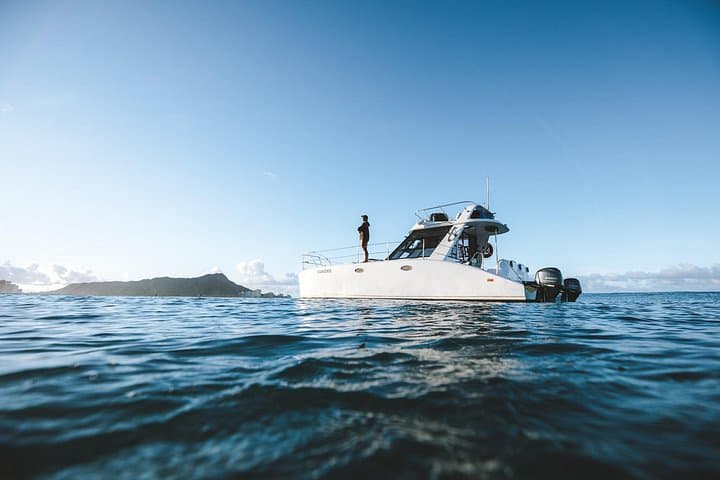
  • Large catamaran — smooth, stable and good for families or anyone prone to seasickness. The most common whale-watching boat, usually with food, drinks and a naturalist aboard.
  • Small raft / zodiac — closer to the water, faster and more intimate, ideal for photographers, but rougher in choppy conditions.
  • Kayak or SUP tour — the slowest, quietest and most immersive option, best for experienced paddlers and only available on some islands.
  • Sunset / dinner cruise — whale watching plus an evening experience; sightings are less reliable than mornings, but you get sunset and cocktails or dinner.
  • Shore spotting — free. The best spots are Papawai Point on Maui and Makapuʻu Lookout on Oʻahu. Bring binoculars for a closer look.

What You'll See

North Pacific humpbacks grow 40–45 feet, and there are many ways they behave at the surface:

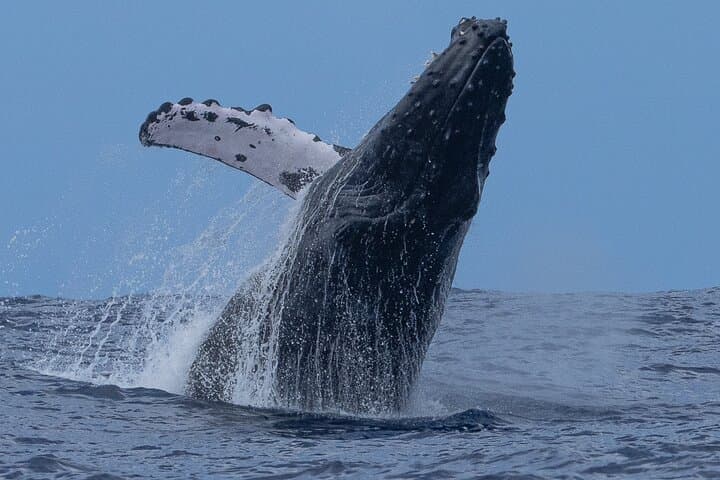
  • Breaching — a 40-ton humpback launches nearly clear of the ocean before crashing back in an explosion of white water.
  • Tail slapping — the whale lifts its massive tail and slaps it against the surface, loud enough to hear from a quarter mile away.
  • Spy hopping — a whale rises slowly and vertically, holding its head just above the surface as if pausing for a deliberate look around.
  • Competitive pods — multiple males pursue a single female in a churning mass of enormous bodies rolling over one another for hours.
  • Mother-calf pairs — a newborn calf, already the size of a small car, stays glued to its mother's side, surfacing in synchrony.
  • Getting 'mugged' — vessels can't approach closer than 100 yards, but sometimes a whale swims right up to the boat on its own. It's the best possible outcome.

Year-Round Species

Humpback season draws the crowds, but Hawaiʻi's marine wildlife performs year-round:

  • Short-finned pilot whales — the most frequently seen: stocky, dark-bodied animals with bulbous heads, traveling in tight family pods of 20 to 30.
  • False killer whales — rarer, sleek and fast-moving, known for leaping clear of the water and occasionally swimming alongside boats.
  • Spinner dolphins — named for launching into the air and spinning on their axis; incredible acrobats.
Kohola Whale Watching ExcursionHawaiʻi IslandFree cancellation

Kohola Whale Watching Excursion

Join us to observe the behavior of the Humpback Whales while they visit the Hawaiian Islands. Learn more about them from our kind & qualified staff. If the whales are singing, we will have the opportunity to listen to their hauntingly beautiful songs with our hydrophone! Our vessel only takes 6 people max so you beat the typical tourist trap large vessels for a more intimate experience.

5.0(14)3 hours
From $160Book Now
Exclusive Waikiki Yacht Snorkel with Lunch and BevsOʻahuFree cancellation

Exclusive Waikiki Yacht Snorkel with Lunch and Bevs

Get with Oahu's ultimate charter on a 43-foot world recognized yacht while enjoying the waters of Waikiki on this 2.5 hour experience. Aboard there’s more than enough space to lounge and relax in this intimate setting with a maximum of six guests. Sip on crisp drink as you take in the vast views of the island and our Hawaiian ocean, also you can satisfy your midday appetite with a fresh personal lunch prepared aboard. Use provided professional snorkel equipment to get up close and personal to our many fish, mammals, and crustaceans during your guided snorkel.

5.0(11)2 hr 30 min
From $274.1Book Now

Browse by Category

Sarah Burchard

Editor's Pick

The first time I saw a whale in Hawaiʻi, I was paddling an outrigger off the Kona Coast at sunrise. When a tail flipped up in the distance, our guide shouted, 'Who wants to jump in and hear them sing?' We dove in just in time to catch a male humpback's cries — still one of the most unique experiences I've had since moving here.

Sarah Burchard

Insider Tips

Know Before You Go

  1. 1Book in advance — peak-season (January–March) tours sell out; book 1–2 weeks ahead, longer for premium operators.
  2. 2What to wear — it gets windy on the water even when it's warm onshore; bring a light jacket, hat and non-slip footwear.
  3. 3What to bring — ID (for alcohol), binoculars, a camera, cash for tips, and Dramamine in case of motion sickness.
  4. 4The 100-yard rule — vessels can't approach a whale closer than 100 yards under federal law, but the whale can come to you (that's 'getting mugged,' the best possible outcome).
  5. 5Sighting guarantees — most peak-season operators offer a free return trip if no whales are spotted; confirm before booking.
  6. 6Morning vs. evening — morning tours have calmer water and higher sighting rates; evenings bring sunsets but possibly fewer whales.

Related Guides

Frequently Asked Questions

Sarah Burchard
Sarah Burchard

Editor · Oʻahu

Sarah Burchard has called Oʻahu home since 2017. com, Hana Hou, FLUX Hawaiʻi, Forbes, Hawaiʻi Magazine and Honolulu Magazine.

More from Sarah