What to do before entering the water
Check surf reports the morning of your visit, not the night before. Arrive early for calmer water and better visibility as conditions worsen when trade winds build in the afternoon. Fit and adjust your mask and fins on the beach, not in the water. Locate lifeguard towers before you enter and note where the nearest one is relative to your entry point. Always snorkel with a buddy. The local mantra holds everywhere in Hawaiʻi: if in doubt, don't go out.
How conditions change
The ocean around Hawaiʻi moves faster than most visitors expect. Wind, tide, current and season all shift conditions, sometimes within hours. A spot that was perfect yesterday can be unsafe today, and a calm morning can turn rough by early afternoon. Never turn your back on the ocean near the shoreline. Waves over three feet mean visibility is compromised and currents are likely too strong to snorkel safely. If the flags are up, or if the water looks churned and brown near shore, get out and come back another day.
Wildlife and reef etiquette
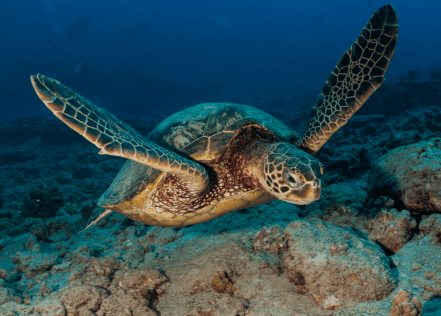
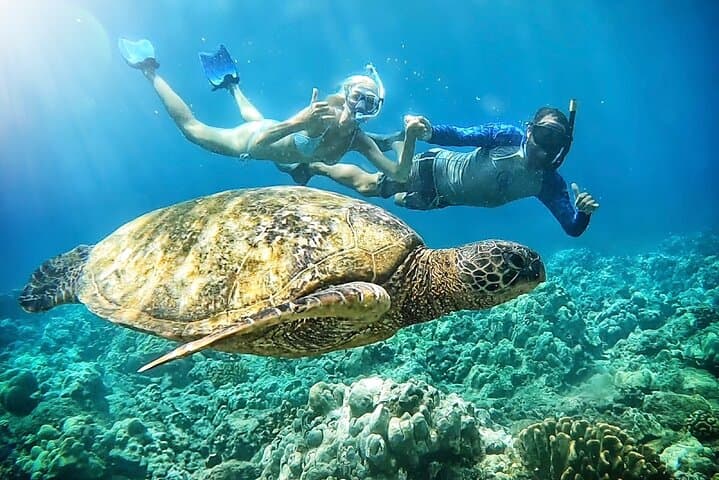
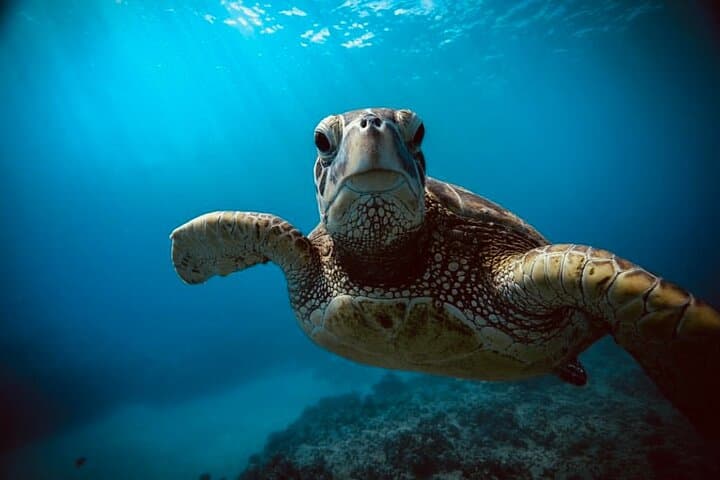
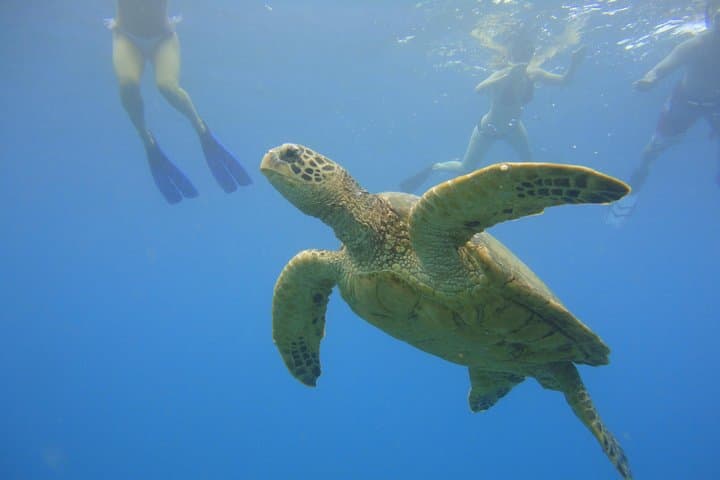
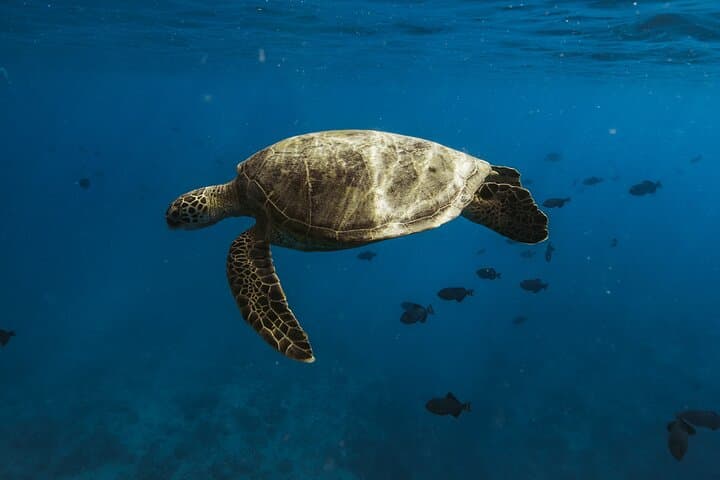
The rules here exist because the reef is fragile and the wildlife is federally protected. Stay at least 10 feet from honu, or Hawaiian green sea turtles — this is a federal law with fines for violations. Hawaiian monk seals require 150 feet of distance. Do not feed fish as it disrupts the ecosystem behavior of the reef. Do not touch coral. Reef cuts are common and coral dies where it's touched and the bacteria you introduce can spread. Reef-safe sunscreen is required by Hawaiʻi state law. These are mineral-based, non-nano formulas. Oxybenzone and octinoxate are banned. Check your label before you pack.
Snorkeling Safety
Snorkeling in Hawaiʻi is one of the most rewarding experiences the islands offer — there is a whole underwater world of neon coral and hundreds of fish species down there. Keeping yourself safe is straightforward if you know the rules before you get in the water.
Consider which side of the island you are on and what season it is.North Shores are swimmable during summer only, May through September. Winter swells make these areas dangerous for snorkeling and swimming regardless of how calm they appear from the beach. South Shores are generally safe year-round. When conditions are hazardous, lifeguards will post beach warning signs. If waves are over three feet, don't go out. Currents will be too strong to snorkel safely and visibility will be compromised.
Snorkel in the morning.Trade winds intensify currents in the afternoon. Morning water is calmer, clearer and safer. Watch for rip currents when entering and exiting — they're most likely to catch you at the shoreline, not in the open water.
Check conditions the morning of your visit.Ocean conditions change rapidly. Check the morning of, not the night before. Safe Beach Day at safebeachday.com posts current weather, surf and beach conditions for all Hawaiʻi beaches. Local rule: when in doubt, don't go out.
Use reef-safe sunscreen.Hawaiʻi banned oxybenzone and octinoxate in 2021. These chemicals damage coral reef ecosystems. Mineral-based, non-nano sunscreen is required by state law. Check the label before you buy. Not all products labeled "reef safe" comply with the Hawaiʻi standard.
Respect federal wildlife distance rules.Stay at least 10 feet from Hawaiian green sea turtles and 150 feet from Hawaiian monk seals. Both are protected under Hawaii state law and the U.S. Endangered Species Act. Touching either is illegal and carries substantial fines.
Know the box jellyfish calendar.Box jellyfish appear on Oʻahu's South Shore 8 to 10 days after each full moon. Reactions from stings range from painful to severe, including scarring. If you're stung, find a lifeguard or seek medical attention. Check the Waikīkī Aquarium's box jellyfish calendar before snorkeling any south shore beach on Oʻahu.
Watch for Portuguese man-of-war. Most common on east and northeast-facing shores. If stung, rinse with vinegar and hot water — not plain water or alcohol — remove any visible tentacles carefully and seek medical attention if the reaction is severe or spreads.
Wear a standard mask and snorkel — not a full-face mask.Full-face snorkel masks have been documented with risk of carbon dioxide buildup in the breathing chamber, and snorkeling deaths have been linked to full-face designs. Use a standard two-piece mask and snorkel instead.
Snorkeling Mistakes to Avoid
Choosing a spot based on photos without checking conditions.An Instagram-famous beach on a rough day is a dangerous beach. Ocean conditions in Hawaiʻi change by the hour. Check surf reports and beach conditions at safebeachday.com the morning of your visit, not the night before.
Ignoring beach warning signs.Warning signs are posted by lifeguards based on actual, current conditions — not liability caution. Wave heights over three feet mean currents are too strong to snorkel safely and visibility is compromised. If the flags are up, stay out of the water.
Touching or walking on coral.Reef cuts are among the most common snorkeling injuries in Hawaiʻi, and they're entirely avoidable. Touching coral also introduces bacteria that can kill it. If you drift close to the reef, back away parallel to it — don't push off with your hands or feet. Watch where your fins are at all times. Getting wana, or sea urchin spines, in your foot is the other common consequence of standing on or near the reef.
Approaching sea turtles or monk seals.Federal law requires 10 feet of distance from Hawaiian green sea turtles and 150 feet from Hawaiian monk seals. There is a hefty fine attached. Observe from a distance.
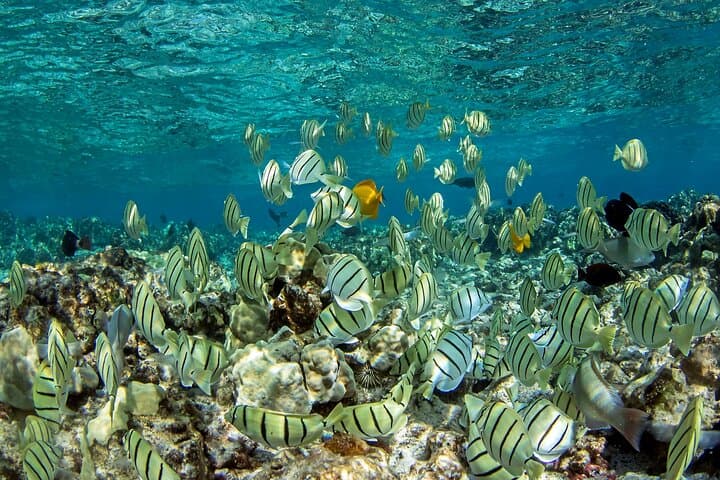
Feeding fish.Don’t feed the fish. It disrupts reef ecosystem behavior, makes fish aggressive toward other snorkelers and changes the balance of species over time.
Using a full-face snorkel mask.Full-face masks have a documented carbon dioxide buildup risk inside the breathing chamber. Multiple snorkeling deaths have been linked to full-face designs. Use a standard mask and snorkel.
Snorkeling alone.The buddy system exists because even confident swimmers get into trouble in open water. Cramps, disorientation and unexpected currents can occur and all of these are manageable with someone beside you. Always snorkel with at least one other person.
Swimming past the reef into open water.The reef edge is where currents intensify and conditions change fast. Open water beyond the reef is unsafe for snorkelers. Stay within the reef system and turn back before you reach the drop-off into deep water.