Rent gear rather than buy it.Full snorkel sets — mask, fins and snorkel — rent for $10 to $20 per day at Snorkel Bob's and Boss Frog's, both of which have multiple locations across the island. Weekly rates are significantly cheaper per day. The advantage of renting from a chain is you can pick up on one side of the island and return on the other. If you're snorkeling more than three days, a weekly rental is almost always a better value.
Reef-safe sunscreen is required by law.Hawaiʻi banned oxybenzone and octinoxate in 2021. These chemicals damage coral reef ecosystems. Mineral-based, non-nano formula is required — check the label, not just the "reef safe" marketing claim, which is sometimes inaccurate. If you're not sure, buy sunscreen on the island rather than relying on what you packed.
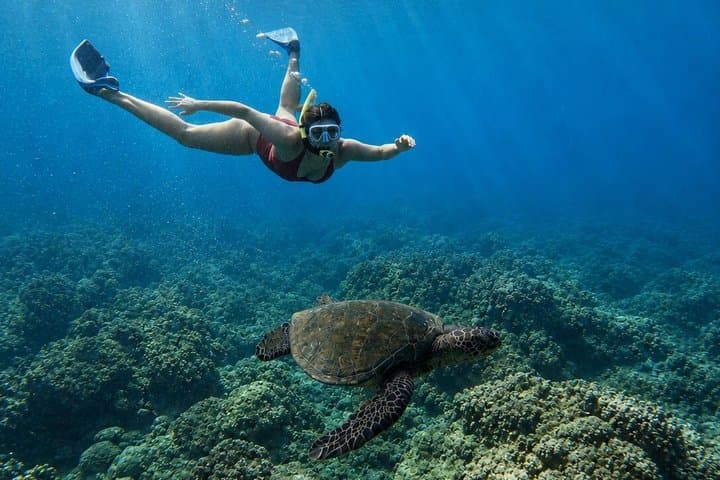
Do not stand on or touch coral.Not only can the reef cut you, but even light contact kills the coral you're touching. Do not touch, chase or approach Hawaiian green sea turtles, always stay at least 10 feet away — this is a federal law with fines. Give Hawaiian monk seals at least 150 feet of space. Do not feed the fish, it disrupts the reef ecosystem and changes fish behavior over time. These rules exist to protect the reef, which doesn’t recover quickly from human contact.
Never snorkel alone.The buddy system is standard for a reason. Currents shift, conditions change and even confident swimmers get into trouble without warning. At minimum, snorkel with one other person and stay within visual range of each other throughout.
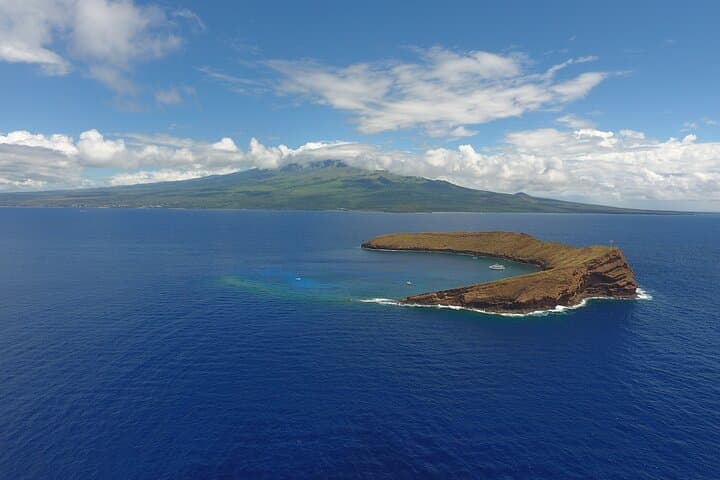
Compare boat operators before you book.Trilogy, Pride of Maui, Sail Maui and Kai Kanani are among the most commonly recommended Maui operators. Key comparison points include departure harbor: Māʻalaea is the closest to Molokini, Lāhainā Harbor recently reopened after the 2023 fires. You can also compare boat type (catamaran vs. raft — rafts are faster and less stable; catamarans are slower and smoother) and what's included (breakfast, lunch, snorkel gear and instruction vary significantly by operator and price tier).
Take seasickness medication the night before.The crossing to Molokini can be rough, especially in winter or on windy afternoons. If you're prone to motion sickness, take motion sickness medication the night before and the morning of your trip — not just the morning of. Starting it the night before significantly improves its effectiveness. Ginger chews are a lower-intervention option for mild sensitivity. Do not wait until you're on the boat to address this.


 MauiFree cancellation