Skip to content
Take our survey — win Hawaii apparel
Hawaii.com
Whale Watching on Maui

Whale Watching on Maui

Maui has the highest humpback concentration in the North Pacific — here's where and when to see them.

Sarah Burchard
By Sarah BurchardExpert verified

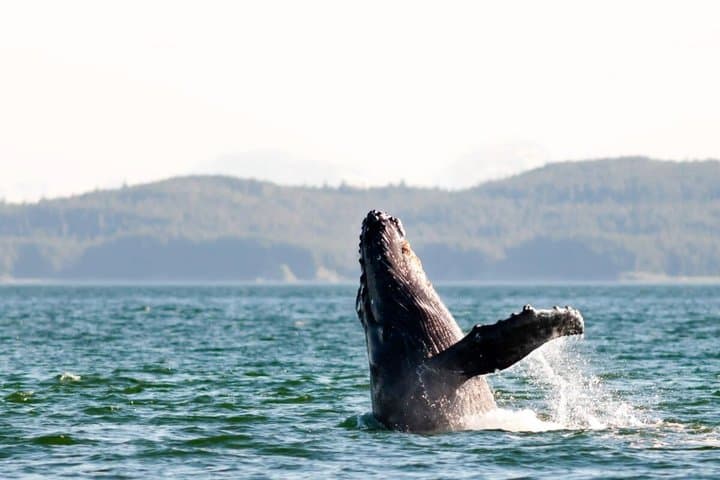
Maui is the best Hawaiian island for whale watching. The ʻAuʻau Channel between Maui, Molokaʻi and Lānaʻi holds the highest concentration of North Pacific humpback whales anywhere in Hawaiʻi — up to 12,000 at peak season. During February and early March, sightings are so frequent from shore that binoculars are optional. You will almost certainly see whales multiple times, possibly breaching just 100 yards from your tour boat.

Quick Decision Guide: Maui Whale Watching

Maui gives you options: book a tour out of Māʻalaea, watch for free from Papawai Point, or time your trip for peak season. Here's how to pick.

Departure harbor

Departure harbor

Māʻalaea Harbor — most accessible, with all-day departures.

Whale watching from shore

Whale watching from shore

McGregor Point + Papawai Point — arguably the best free spots in Hawaiʻi, with a NOAA whale-counting station on-site.

If staying in Kāʻanapali

If staying in Kāʻanapali

Sea Maui, Gemini Sailing Charters or Trilogy — all depart directly from Kāʻanapali Beach.

If staying in South Maui / Wailea

If staying in South Maui / Wailea

Kai Kanani (Wailea) — no drive to Māʻalaea or Kāʻanapali.

Value tour

Value tour

Quicksilver (Māʻalaea) — $59.95 double-deck catamaran.

Educational tour

Educational tour

PacWhale Eco-Adventures (Māʻalaea) — 45+ years of research, the most daily departures, a 97% sighting rate.

Sighting guarantee

Sighting guarantee

Kai Kanani (Wailea) — $139, with a free re-book if no whales are spotted.

Hotel lānai lookout

Hotel lānai lookout

Sheraton Maui Resort & Spa at Puʻu Kekaʻa (Black Rock).

Rainy-day alternative

Rainy-day alternative

Maui Ocean Center — the Humpbacks of Hawaiʻi Exhibit & 3D Sphere in Māʻalaea.

Time of day

Time of day

Early morning — calmer water and better light for photography.

Quick Facts About Maui Whale Watching

  • Season: December 15 – April 15 (peak January to March, with February typically having the most whales)
  • Best island in Hawaiʻi for whale watching: yes — Maui has the highest humpback concentration in the North Pacific
  • Best time of day: early morning for calmer water and better light for photography
  • Shore spotting: excellent. McGregor Point and Papawai Point are among the best free spots in Hawaiʻi to see whales
  • Tour departures: Māʻalaea Harbor (most operators), Kāʻanapali Beach, Wailea, and Lāhainā Harbor (partially restored after the 2023 wildfires)
  • Average tour cost: $55–$139 depending on vessel and operator
  • Sighting guarantee: most peak-season operators offer a free return if no whales are spotted

Where to Watch from Shore

Whales come so close to Maui’s shores in peak season that a beach walk or a roadside pullout can be as rewarding as a boat. Here are the best free spots.

Kāʻanapali Beach Walk

With Molokaʻi and Lānaʻi as a picturesque backdrop, Kāʻanapali Beach is the perfect place for a casual whale sighting while having a fish taco at Leilani’s on the Beach, a lobster potsticker at Hula Grill or splashing in the shore break by Puʻu Kekaʻa (“Black Rock”). Park in the Kāʻanapali beach-access lot, or at the adjoining Whalers Village shopping center, and walk the boardwalk between the resort hotels. Several tour operators also head out directly from this beach.

Kāʻanapali Beach. Photo by Richie Chan (Shutterstock).

McGregor Point & Papawai Point

Located on Honoapiʻilani Highway between Māʻalaea and Lāhainā, this small roadside pullout is arguably the single best free whale watching spot in all of Hawaiʻi. NOAA operates an official whale-counting station here. During peak season, it is common to see multiple whales breaching, tail-slapping and spouting simultaneously. Pull off about three minutes after going through the tunnel heading north on Honoapiʻilani Highway; there’s a turn-off with a small parking lot, which is a sure bet for whale watching from the 1,000-foot elevation.

Just south of McGregor Point on the same highway is Papawai Point. This is another reliable pullout with direct views of the ʻAuʻau Channel, and it is often less crowded than McGregor.

McGregor Point Lighthouse. Photo by @greg.gerla via Instagram.

Wailea Beach Walk & Polo Beach

This paved 1.5-mile coastal path between Mokapu and Polo Beaches in Wailea sits just above the shoreline. During peak season it is common to see more than 10 spouts in a 30-minute walk, and there are benches along the path to sit and watch. Adjacent to the Fairmont Kea Lani, Polo Beach is an ideal sandy expanse for catching a glimpse of humpback whales on the south side. With public access, a parking lot and restrooms, this family-friendly spot makes it easy to combine a beach day with whale watching.

Polo Beach. Photo by @steveshead via Instagram.

Pāpalaua Wayside Park (Olowalu)

Though it’s primarily a surf spot known as 1,000 Peaks, this beach right before entering the Pali is another excellent spot for whale watching. Grab a sandwich (or a pie) from Leoda’s Kitchen & Pie Shop in Olowalu town, then park it at 1,000 Peaks for some on-the-fly humpback whale action. Be sure to park responsibly and use the parking lot, otherwise you might get stuck in the sand.

Honolua Bay (Kapalua)

Honolua Bay is perhaps the most iconic surf spot on the island and is also an excellent outpost for whale watching. Just past the Kapalua Plantation House Restaurant, there is a lookout and parking lot overlooking the bay. Enjoy surfers taking off on the perfect right as they enter the barrel while you wait for the spouts to appear.

South Maui Beaches

Kīhei, Wailea and Mākena beaches have calm winter conditions on Maui’s South Shore, and the whales’ proximity to shore means that almost any beach south of Māʻalaea will give you sighting opportunities in January and February.

Choosing Your Harbor

Where you depart matters as much as which operator you book:

  • Māʻalaea Harbor — best overall. The most operators, a central location, all-day departures, and the easiest booking for first-time visitors.
  • Kāʻanapali Beach — best if you're staying in West Maui. Tours load directly off the beach for a casual, small-group feel, but you'll wade into shallow water to board (plan footwear; may not suit limited-mobility guests).
  • Wailea (Kai Kanani) — best if you're in South Maui. Departing from Wailea skips the drive entirely, with a luxury experience, chef-prepped cuisine and a sighting guarantee.

Best Hotel Lookouts

Several Kāʻanapali resorts face the ʻAuʻau Channel directly, so a lānai or a restaurant table can double as a whale-watching perch.

Hyatt Regency Maui Resort and Spa (Kāʻanapali)

Whether you’re on your oceanfront hotel room’s lānai or feasting on sushi at the Hyatt’s in-house restaurant Japengo, you’ll have an ideal view of mama whales teaching their keiki how to breach. Japengo faces the ʻAuʻau Channel between the islands that make up Maui County.

Sheraton Maui Resort & Spa (Kāʻanapali)

With the majestic Puʻu Kekaʻa (also known as “Black Rock”), where the soul jumps from this realm to the next, jutting out from the hotel’s edge, situating yourself in this mini-bay is an ideal perch to see spouts and possibly more.

The Westin Maui Resort & Spa (Kāʻanapali)

Just outside the hotel grounds, on The Westin’s private lawn in the middle of bustling Whalers Village, is a spot ripe for spotting spouts and other whale activity. Snag a table at ʻUlu Kitchen right on the boardwalk for leisurely dining paired with prime whale watching views.

Book a stay

Photo courtesy of The Westin Maui Resort & Spa, Kāʻanapali.

Whale Watching Tours

Maui has the most whale watching tour operators of any Hawaiian island. Most tours run about two hours and include a naturalist and a hydrophone so you can hear the humpbacks sing. Here are some of our favorites.

Note: “Guaranteed sightings” means that if you do not see a whale, the operator will let you book another tour free of charge.

Sea Maui (Kāʻanapali)

Sea Maui is Kāʻanapali’s go-to activity hub, from surf lessons to snorkel cruises and private charters. Sea Maui offers two-hour excursions off the coast of West Maui to peer into the secret lives of humpbacks. Naturalists are on board to explain facts about the whales and dive into the behind-the-scenes of their migration.

If you’re not here for the science, fear not. Sea Maui’s catamarans boast comfy bean bags, gorgeous views and an open bar (think mai tais and Maui mules alongside beer and wine) as the friendly and knowledgeable crew tracks down the most active pods for your viewing pleasure.

Pricing: $97.49 adults 21+ · $86.03 teens 13–20 · $74.55 children 3–12 · free for children 2 and under

Whale watch times: 8–10 a.m., 11 a.m.–1 p.m., 2–4 p.m.

BOOK A TOUR

Gemini Sailing Charters (Kāʻanapali)

Celebrating 30 years roving the Kāʻanapali shoreline, Gemini Sailing Charters offers morning and afternoon whale watching experiences from December 15 to April 15. Feast your eyes on pods of humpbacks — with a hydrophone to hear the whales’ signature songs from below the surface — and feast yourself on Gemini’s buffet dining.

If you’re on the morning trip, there’s a continental breakfast of cinnamon rolls, tropical fruit and freshly brewed Maui coffee, while the evening cruise offers teriyaki chicken, fried rice and homemade chocolate chip cookies. Enjoy a complimentary beverage, such as a Gemini mai tai, a Maui hard seltzer or a beer from Maui Brewing Co.

Pricing: $85 adults 18+ · $73 teens 13–17 · $63 children 3–12 · free for children 2 and under

Whale watch times: 8–10 a.m., 4–6 p.m.

BOOK A TOUR

Trilogy (Kāʻanapali & Māʻalaea)

Join the sailing Coon family for an unforgettable whale watching experience. This family-owned and operated company has been in business since 1971 and was voted Sustainable Ecotour Operator of the Year (2017) by the Hawaiʻi Ecotourism Association. They offer multiple times and locations, including a deluxe sunset tour leaving from Māʻalaea Harbor. Catch a hopeful breach backed by neon skies as you snack on Kula cherry tomato and mozzarella skewers, hummus with vegetables, BBQ chicken satay and kālua pork sliders. A premium bar featuring house cocktails, such as a Lānaʻi Tai and an 808 Margarita, is also available.

Whether you’re leaving from Kāʻanapali or Māʻalaea for the daytime tours, you’ll be treated with the ultimate hoʻokipa (hospitality) from the captain and crew. The early morning tours feature Mama Coon’s cinnamon rolls, while the mid-morning and afternoon tours offer deli sliders and fresh fruit, plus two complimentary adult beverages as you sail back to port. On board, expert naturalists have a hydrophone so you can hear the humpbacks’ song as they swim below.

Pricing (Kāʻanapali & Māʻalaea): $95 adults 18+ · $75 teens 13–17 · $55 children 3–12 · free for children 2 and under

Deluxe Māʻalaea sunset whale watch: $122 adults and teens 13+ · $82 children 3–12 · free for children 2 and under

Whale watch times: Kāʻanapali 8–10 a.m., 10:30 a.m.–12:30 p.m., 1–3 p.m. · Māʻalaea 1–3 p.m. · Deluxe sunset watch 4–6 p.m. (Dec 15–Jan 30), 4:30–6:30 p.m. (Feb 1–Mar 31), 5–7 p.m. (Apr 1–15)

BOOK A TOUR

PacWhale Eco-Adventures (Māʻalaea)

As the whale-watching tour with the most departures on Maui, these certified marine naturalists have over 45 years’ experience with humpback research and conservation. With 12 different types of whale watches, there will surely be a perfect fit for you and your family. From the classic two-hour cruise to a three-hour sunset dinner and whale watch and a hybrid snorkel and whale watch cruise, the options give you all the control.

They boast a 97% success rate with whale sightings. If for some reason these gentle giants are shy, you can go again for free on another whale watch of equal or lesser value within one year.

Classic Whale Watch pricing (pre-discount): $99.05 adults 13+ · $55.55 children 5–12 · free for children 4 and under

Classic Whale Watch times: 10:30 a.m.–12:30 p.m., 1–3 p.m., 2–4 p.m.

BOOK A TOUR

Quicksilver (Māʻalaea)

This double-deck catamaran adventure is a fun, informative and budget-friendly way to whale watch. With four departure times throughout the day, Quicksilver boasts some of the best views from its two-story boat, along with naturalists offering extensive narration of whale history and behavior. Learn fun facts, like “the lungs of a full-grown adult humpback are as big as a VW Bug!”

Sate yourself while you cruise with unlimited juice, soda and water. Need something stronger? Alcoholic beverages and Dramamine (just in case) are available for purchase.

Pricing: $59.95 adults 13+ · $49.95 children 7–12 · free for children 6 and under (with an adult)

Whale watch times: 8–10 a.m., 10:30 a.m.–12:30 p.m., 1–3 p.m., 3:30–5:30 p.m.

BOOK A TOUR

Kai Kanani (Wailea)

For a posh whale-watching experience, Kai Kanani is your answer. They’ve been in business for over 30 years, and this is the only catamaran that leaves from the south side, so if you’re staying in Kīhei, Wailea or Mākena, this is the most convenient tour. Backed by a hyper-attentive crew and extremely knowledgeable naturalists, you’ll get an Ivy League education on these majestic creatures, all while sailing in the lap of luxury.

The tour features cuisine prepped by Wailea’s farm-to-table eatery Spoon & Key Market, and the bar is stocked with organic spirits from Maui’s Ocean Vodka, Fy Organic Gin and wines from MauiWine. They also offer a Mercedes shuttle from select Wailea resorts to and from their launching point at Maluaka Beach.

Worried you won’t get a maritime show? Don’t be. They guarantee you’ll see whales. If not, your next whale watching tour is on them.

Pricing: $139 adults 13+ · $100 children 2–12 · free for children 1 and under

Whale watch times: 1:45–3:45 p.m.

BOOK A TOUR

When is Whale Watching Season on Maui?

Winter in Hawaiʻi hits different. The days are still sun-kissed and 80-something, and Mele Kalikimaka (Merry Christmas) is just as likely to be sung with sand between your toes. But the real holiday magic arrives offshore: the annual return of the humpback whales.

According to NOAA, “scientists estimate that up to 12,000 whales — more than half of the North Pacific humpback population — return to Hawaiian waters from November through May to breed, calve and nurse their young. No one knows exactly how long humpback whales have been mating and reproducing in the islands’ warm, shallow waters, but narrative reports from whalers document seeing them as early as the 1840s.”

Season runs December 15 to April 15, with the first whales arriving in late November. February has the highest density — volunteers counted 802 whales off Maui in February 2025 — while January and March offer nearly as many sightings with better tour availability. Book early-morning tours for calmer water and better light; afternoons can be choppy. Very few operators run in November, so we don't recommend booking then despite some early-season presence.

Practical Tips

  • Book in advance. Peak season (January–February) tours sell out weeks ahead for popular operators.
  • If staying in South Maui, book with Kai Kanani to avoid driving to Māʻalaea or Kāʻanapali.
  • Most boat tours load from the beach, so wear easily removable footwear. Kāʻanapali beach-loading tours require walking into the water to board, which may not suit limited-mobility visitors. Māʻalaea Harbor tours are more accessible.
  • Snorkeling tours do not prioritize whale watching. If whales are the goal, book a dedicated whale watch.
  • Use only reef-safe sunscreen. This is required by Hawaiʻi law.
  • McGregor Point parking fills by 9 a.m. on peak-season weekends. Arrive early or visit on weekdays.
  • Bring cash to tip the boat crew, and your ID if you’d like a drink that contains alcohol.
  • It can get windy on the boats, so bring a light jacket and a hat.
  • Bring binoculars for an even closer view. (Bonus points if you can count the barnacles.)
  • Most tours last two hours, but get to the designated loading area about 30 minutes before departure.
  • If you are prone to seasickness, take Dramamine 30 to 60 minutes before boarding.

Learn more in our statewide Hawaiʻi Whale Watching Guide.

Responsible Whale Watching

The ʻAuʻau Channel is one of the Pacific's primary humpback nurseries, so whale density in peak season is exceptionally high. Reputable operators follow strict federal guidelines that protect humpbacks and other marine mammals. If you plan to view whales from your own kayak, paddleboard or private boat, see our statewide Hawaiʻi Whale Watching Guide for the regulations and responsible-viewing rules.

Rainy Day: Maui Ocean Center

When conditions are too rough to head out, the Humpbacks of Hawaiʻi Exhibit & 3D Sphere at the Maui Ocean Center in Māʻalaea is an excellent indoor complement — showings every half hour, no reservations, open daily 10 a.m.–4:30 p.m., included with admission.

Maui: Catamaran Sunset Whale Watch with CocktailsMauiFree cancellation

Maui: Catamaran Sunset Whale Watch with Cocktails

Experience the best of whale season at sunset! Watch humpbacks breach and play from the deck of a 65' luxury catamaran as the sun sets with an ice-cold cocktail in hand. Guaranteed humpback whale sightings on every charter. Expert on board narration from certified marine naturalists. Live humpback songs through custom onboard hydrophones.

5.0(1)2 hours
From $189Book Now
West Maui: Whale Watching and Reef Snorkeling Kayak AdventureMauiFree cancellation

West Maui: Whale Watching and Reef Snorkeling Kayak Adventure

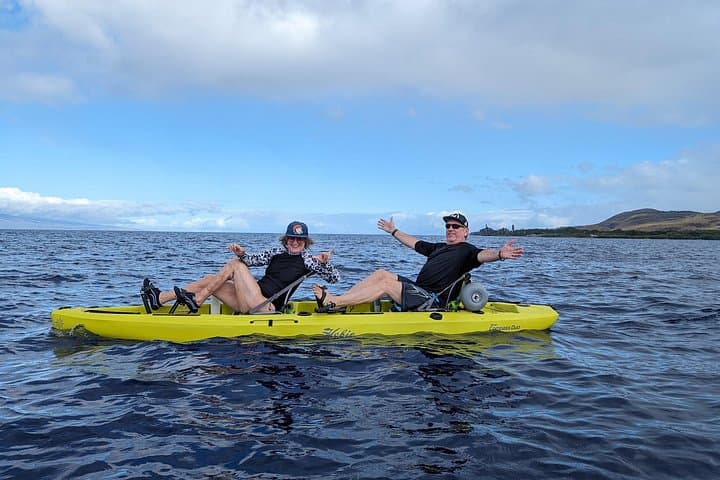
Our company mission is to educate and share the wonders of Maui Nui’s vibrant marine life. Our pedal kayak adventures commence from Olowalu Beach, a stunning location in West Maui. These special kayaks, powered by your feet with pedals, will allow you to focus on the fun with your hands on free from paddling. These easy to board, control and disembark kayaks along with your naturalist guide will ensure everyone has an epic adventure.

5.0(1)3 hours
From $200Book Now

Browse by Category

Sarah Burchard

Editor's Pick

Maui is the best island in Hawaiʻi for whale watching, full stop. If you can only whale watch once on your trip, do it here.

— Sarah Burchard

Insider Tips

Know Before You Go

  1. 1Book in advance — peak-season (January–February) tours sell out weeks ahead.
  2. 2Staying in South Maui? Book Kai Kanani to avoid the drive to Māʻalaea or Kāʻanapali.
  3. 3Most tours load from the beach — wear easily removable footwear. Kāʻanapali beach-loading tours require wading in; Māʻalaea Harbor is more accessible.
  4. 4Snorkeling tours don't prioritize whales — if whales are the goal, book a dedicated whale watch.
  5. 5Use only reef-safe sunscreen — it's required by Hawaiʻi law.
  6. 6McGregor Point parking fills by 9 a.m. on peak-season weekends — arrive early or go on a weekday.
  7. 7Bring cash to tip the crew, and an ID if you'd like a drink onboard.
  8. 8It gets windy on the water — pack a light jacket, a hat, and binoculars for a closer look.
  9. 9Arrive at the loading area about 30 minutes before departure.
  10. 10Prone to seasickness? Take Dramamine 30–60 minutes before boarding.

Related Guides

Frequently Asked Questions

Sarah Burchard
Sarah Burchard

Editor · Oʻahu

Sarah Burchard has called Oʻahu home since 2017. com, Hana Hou, FLUX Hawaiʻi, Forbes, Hawaiʻi Magazine and Honolulu Magazine.

More from Sarah →